Mercury tonight: when you can see the innermost planet
Mercury is the hardest of the bright planets to catch: it never gets far from the Sun, so it shows only low in bright twilight, for a couple of weeks at a time, a few times a year. Below is whether you can see it tonight, computed for your location, and when its next good showing is.
Tonight from where you are
Working it out for your time zone…
Computed in your browser.
Mercury tonight from four cities
| City | Tonight | Rises / sets |
|---|---|---|
| New York | too close to the Sun | 5:51 am / 4:22 pm |
| Los Angeles | too close to the Sun | 5:37 am / 4:27 pm |
| London | too close to the Sun | 6:18 am / 4:06 pm |
| Sydney | too close to the Sun | 5:26 am / 6:38 pm |
Local times for the night of November 7, 2026, counted as “up” when at least 10° above the horizon after dark. Computed with Astronomy Engine when this page was built; it refreshes every hour.
Right now
- In the constellation
- Libra
- Brightness
- magnitude 3.3 (lower is brighter)
- Distance from Earth
- 105.2 million km
- Its light takes
- 6 minutes to reach you
- Next greatest elongation
- November 20, 2026, 20° from the Sun in the morning sky
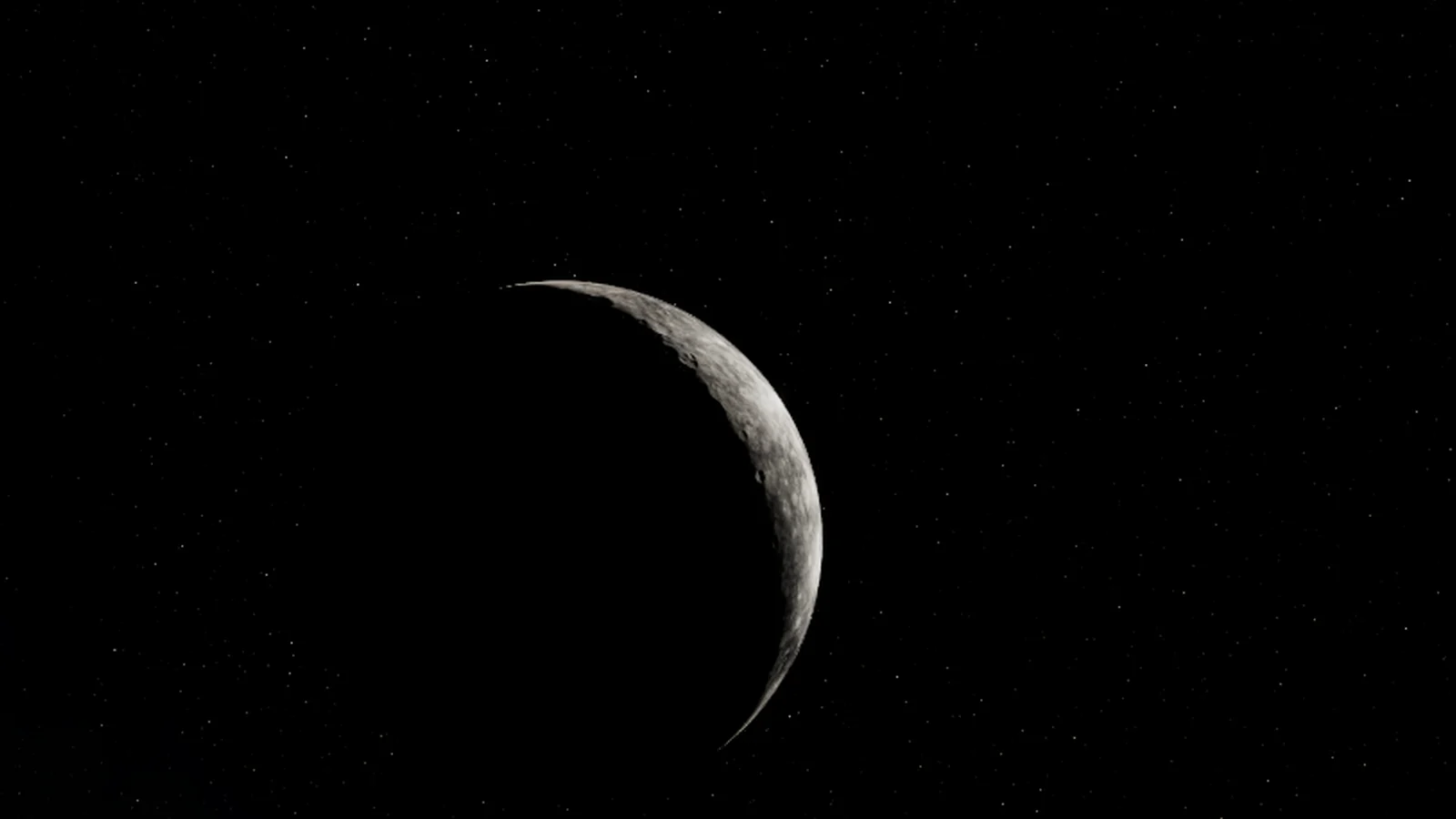
Mercury: the facts
| Width | 4,879 km, a little larger than our Moon [1] |
|---|---|
| A year | 88 Earth days, the shortest of any planet [1] |
| A day | 176 Earth days from one sunrise to the next [1] |
| Average distance from the Sun | 58 million km (0.39 times Earth's) [1] |
| Moons | none [1] |
When is the best time to see Mercury?
Around its greatest elongation, when it's as far from the Sun in our sky as it gets. Then look low in the west starting about half an hour after sunset (an evening elongation) or low in the east about an hour before sunrise (a morning one), with a flat, clear horizon. It looks like a modest star, often pinkish in the twilight, and it doesn't twinkle much.
Some elongations are much better than others. The best evening ones for mid-northern latitudes come in spring, when the Sun's path stands steeply up from the western horizon; the best morning ones come in autumn. The box below gives the next elongation, computed.
What is Mercury like up close?
A cratered, airless world that looks a lot like our Moon, but denser: most of it is a huge iron core. Days are scorching and nights bitterly cold, from about 430 °C down to about −180 °C, yet NASA's MESSENGER spacecraft, which orbited it from 2011 to 2015, found water ice in craters near the poles that sunlight never reaches.
Can you see Mercury in Everdust?
In Everdust's Night Sky on Apple Vision Pro, look at Mercury and pinch to fly there. Mercury Today shows it in tonight's real phase, mapped from NASA's MESSENGER spacecraft. On iPhone and iPad, tap Mercury in Night Sky to fly there.
Everdust is free on the App Store for Apple Vision Pro, iPhone and iPad; on Android, Tonight’s Sky in Everdust for Android (free on Google Play) shows where Mercury is tonight from where you stand. I make Everdust, so weigh that; a phone star map such as Stellarium or Sky Guide will find Mercury just as well.
Questions people ask
Can I see Mercury tonight? Mercury is too close to the Sun to see tonight; it's lost in the twilight glare. That's for New York on the night of November 7, 2026; this page works it out for your own location too.
Where is Mercury in the sky right now? Mercury is in Libra, shining at magnitude 3.3. Its light takes 6 minutes to reach Earth.
Why is Mercury so hard to see? It orbits so close to the Sun that from Earth it never appears more than about 28° from it, so it's always in or near twilight and low over the horizon, where haze and buildings get in the way.
Can you see Mercury with the naked eye? Yes, at a good elongation it's about as bright as the brighter stars. Binoculars help you find it in the twilight glow; put them away before the Sun rises.
Does Mercury have moons? No. Mercury and Venus are the only planets with none.
Sources
Positions, rise and set times, brightness, phases and distances on this page are computed with Astronomy Engine (Don Cross, MIT license), accurate to about an arcminute.