Betelgeuse
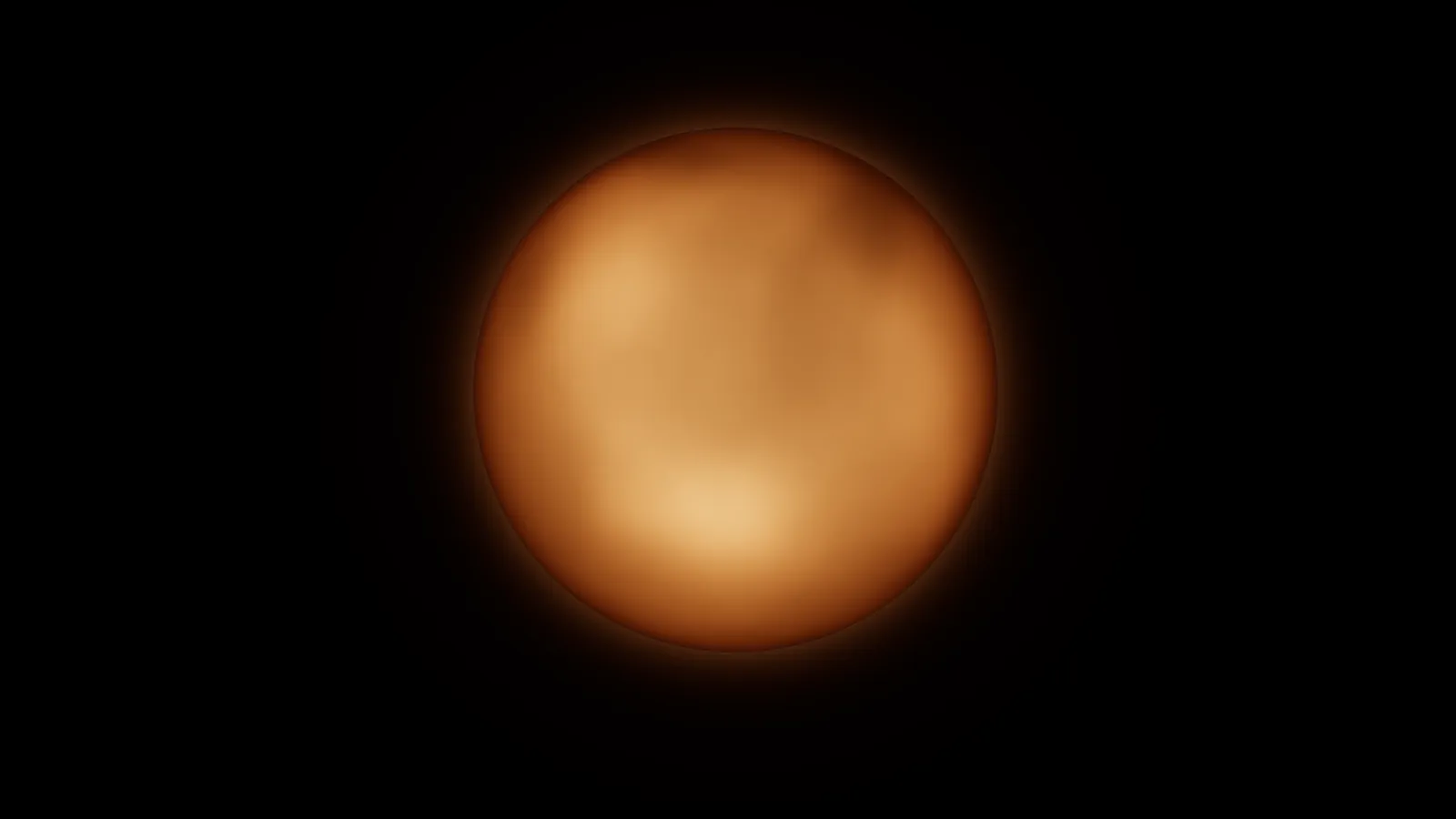
Betelgeuse is the orange-red star at Orion's shoulder, a red supergiant about 700 light-years away and one of the largest stars known. It's only about 10 million years old, but it is so massive that it is already near the end of its life, and one day it will explode as a supernova, though probably not for about 100,000 years. It's easy to see with your eyes.
When to see it
Best evenings: December to April.
Seen from north of about 73° S. Choose your city for tonight’s times and where to look.
“Up” means at least 10° above the horizon while the Sun is at least 12° below it (dark enough for faint nebulae and galaxies). Your location, if you share it, stays on this device.
At a glance
- Distance
- 700 light-years [1]
- The light you see left it
- around the year 1330
- Constellation
- Orion
- Position (J2000)
- RA 5h 55m 10s, Dec +7° 24′
- Visible from
- north of about 73° S (farther south it never climbs 10° above the horizon)
- High in the evening (9 pm)
- December to April from mid-northern latitudes; January to March from mid-southern latitudes
- How to see it
- With your eyes
Betelgeuse tonight from four cities
| City | Tonight |
|---|---|
| New York | Up now and all night, best around 2:45 am, look south.best 2:45 am, 57° up, south |
| Los Angeles | Up after 9:10 pm, best around 2:45 am, look south.best 2:45 am, 63° up, south |
| London | Up now and all night, best around 4:30 am, look south-west.best 4:30 am, 41° up, south-west |
| Sydney | Up after 11 pm, best around 3:45 am, look north.best 3:45 am, 49° up, north |
Tonight in each city’s local time, computed November 8, 2026 with Astronomy Engine (the page refreshes every hour). For your own city, choose it above.
Betelgeuse: the facts
| Also called | Alpha Orionis [1] |
|---|---|
| Kind | a red supergiant, one of the largest stars known [1] |
| Age | about 10 million years (the Sun is about 4.6 billion) [1] |
| The Great Dimming | 2019–20: gas the star threw out cooled into dust and hid part of it [3] |
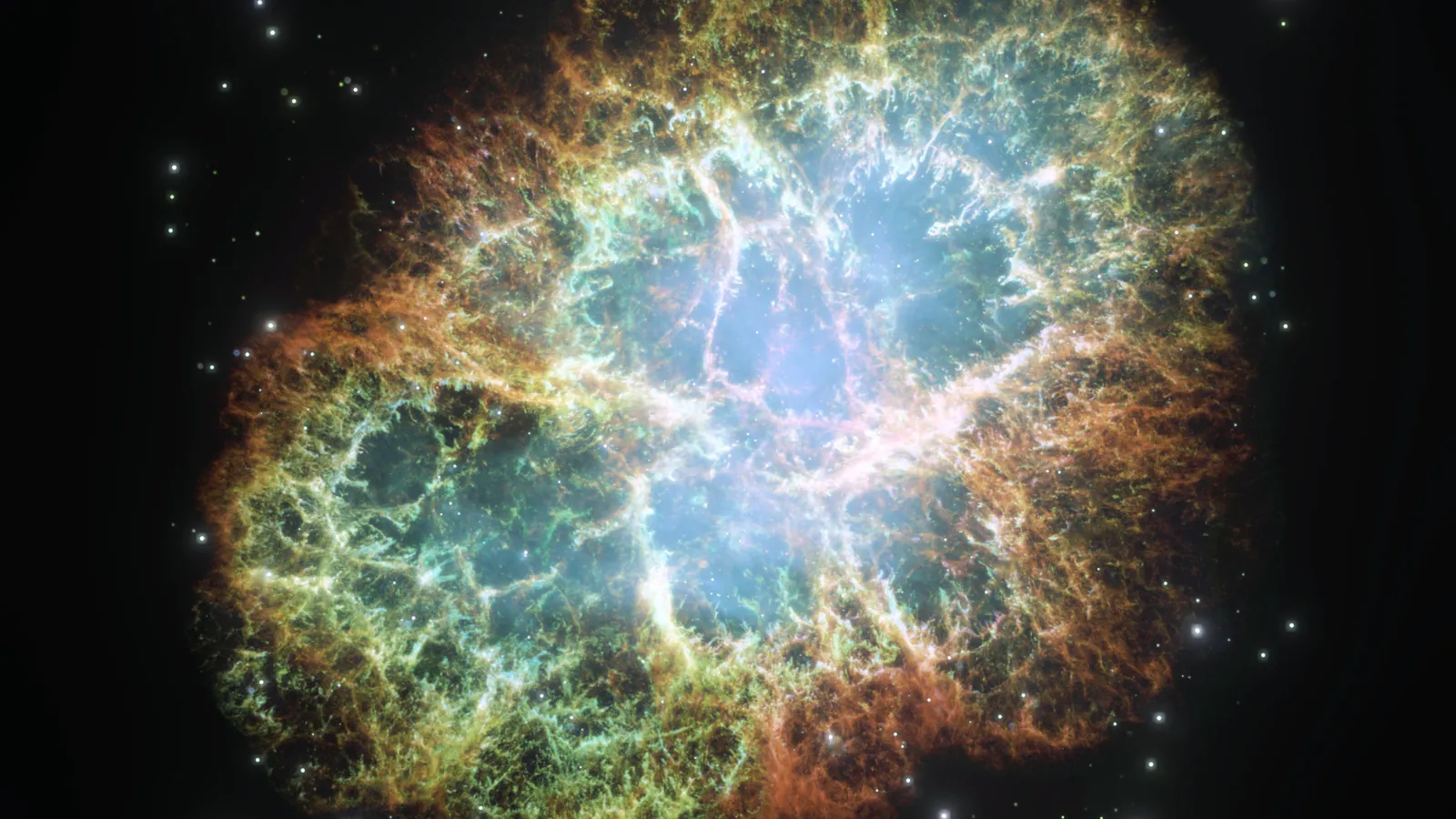
| Its supernova | probably not for about another 100,000 years; it will leave a neutron star or a black hole [1] |
What happened in Betelgeuse's Great Dimming?
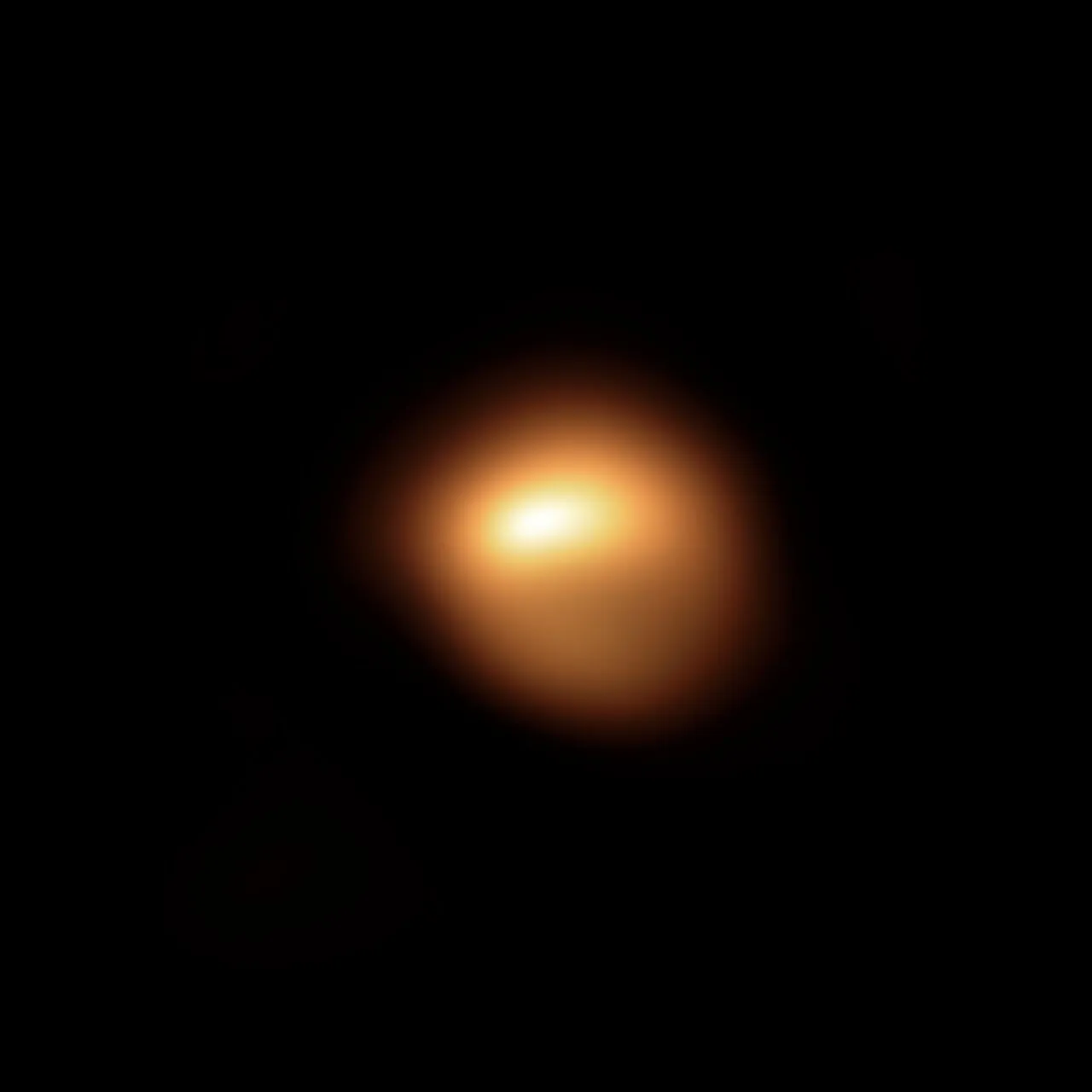
Late in 2019 Betelgeuse faded noticeably, enough that people wondered if it was about to explode. The VLT's SPHERE instrument photographed its surface and saw the star's southern part dimmed and its shape changed. Astronomers concluded that hot material the star had thrown out cooled into a cloud of dust that hid part of it for months. By 2020 it had recovered.
Will Betelgeuse explode soon?
Not on any human timescale, as far as anyone can tell: NASA's estimate is about another 100,000 years, after which it will become a neutron star or a black hole. At about 700 light-years it is far too distant for its explosion to harm Earth.
Step inside Betelgeuse in Everdust
In Everdust’s Night Sky, look at Betelgeuse and pinch to fly there on Apple Vision Pro, or tap it on iPhone and iPad. What you arrive in, in the app’s own words: “Betelgeuse as it is today. Slide back to the Great Dimming of 2019–20, or ahead to its supernova in about 100,000 years.”
Everdust on the App Store for iPhone, iPad and Vision Pro
Everdust is free on the App Store for Apple Vision Pro, iPhone and iPad; Night Sky flies to Betelgeuse on each. It is also free on Apple TV and on Google Play for Android, with other worlds; Android’s Night Sky has other wonders, not this one. I make Everdust, so weigh that; a star-map app such as Stellarium or SkySafari will find Betelgeuse just as well.
Questions people ask
Can I see Betelgeuse tonight? It depends on where you are. It can be seen from north of about 73° S, and it is best in the evening sky December to April from mid-northern latitudes and January to March from mid-southern latitudes. Choose your city on this page for tonight's times and where to look. With your eyes: Easy: the orange-red star at the top left of Orion (as seen from the Northern Hemisphere), opposite blue-white Rigel.
Where is Betelgeuse in the sky? In the constellation Orion, at right ascension 5h 55m 10s and declination +7° 24′ (J2000). It can be seen from north of about 73° S (farther south it never climbs 10° above the horizon).
How far away is Betelgeuse? About 700 light-years (NASA): the light you see tonight left it about 700 years ago.
Why is Betelgeuse red? Its surface is much cooler than the Sun's, so it shines more red and orange light. It's a supergiant: a massive star swollen to enormous size near the end of its life.
Sources
- Distance: “Betelgeuse is around 700 light-years away” (science.nasa.gov, the figure Everdust uses)
- ESO eso2003a: SPHERE's view of Betelgeuse in December 2019
- ESO eso2003a: SPHERE's view of Betelgeuse in December 2019
Distance and position: the deep-sky catalog in Everdust’s Night Sky (read November 1, 2026), each figure quoted from the source above. Constellation, seasons and tonight are computed with Astronomy Engine (Don Cross, MIT license). More: Wikipedia.