Stellarium vs Night Sky vs Everdust
Is Stellarium, Night Sky or Everdust better for the night sky? To identify what's above you and plan a night's observing, Stellarium is the better pick for the money: it's free on iPhone, iPad and Android, its desktop version is free and open source, and Stellarium VR is on Meta Quest. Night Sky, by iCandi Apps, is the more guided one, on every Apple device but not Android, with AR views and Aura, an AI astronomer, on a subscription; on Vision Pro it is an immersive planetarium. Everdust isn't a star map. It's for being inside the sky: on Apple Vision Pro its free Night Sky puts the real sky for your place and time around you, and you pinch to fly to a planet or into one of 29 nebulae, galaxies and star clusters. On iPhone, iPad and Android its Night Sky lets you hold up your phone to the real sky and tap a wonder to fly into it, beside Tonight's Sky; it isn't a full star map there either.
- Pick Stellarium to identify stars and plan observing for the least money: free on iPhone, iPad and Android, Stellarium Plus for $1.99 or $18.99, and a free desktop version.
- Pick Night Sky on Apple devices for guided tours, AR views and Aura, an AI astronomer you can ask (with Night Sky+ Aura), on iPhone, iPad, Mac, Apple Watch, Apple TV and Vision Pro.
- Pick Everdust on Apple Vision Pro to fly into the nebulae and galaxies themselves, for free; on iPhone, iPad and Android for Night Sky and Tonight's Sky alongside its simulations.
- On Meta Quest, Stellarium VR ($9.99) is the star map. Everdust is free on Quest, but its Night Sky comes there in a later update.
Side by side
| Feature | Stellarium | Night Sky | Everdust |
|---|---|---|---|
| Made by | Mobile and VR: Noctua Software / Stellarium Labs, from Stellarium's original creator. Desktop: the open-source Stellarium project[1][2][3] | iCandi Apps[4] | Decosa, Inc. (my company)[5][6] |
| Best at | Identifying and planning: a deep catalog, observing tools and telescope control (with Plus)[1] | A guided sky on every Apple device: tours, AR views and an AI astronomer[4][7] | Being inside the sky: the real sky around you on Vision Pro, with flights into its wonders[5][8] |
| Platforms | iPhone, iPad and Android (Stellarium Mobile; it runs on Vision Pro as an iPad app); Meta Quest (Stellarium VR); desktop for Windows, macOS and Linux, and Stellarium Web[1][9][2][3] | iPhone, iPad, Mac, Apple Vision Pro, Apple TV, Apple Watch and iMessage. No Android[4][7] | Out now: Apple Vision Pro, Apple TV, Android phones and tablets, iPhone, iPad and Meta Quest 3 and 3S. Mac: a free download from everdust.ai/mac (Mac App Store version in review).[5][6] |
| Price and free tier | Free, with stars to about magnitude 8 (iOS) or 10 (Android); Stellarium Plus $1.99 or $18.99. Stellarium VR $9.99. Desktop free and open source[1][9][2][3] | Free; Night Sky+ ($5.99 to $49.99) and Night Sky+ Aura ($9.99 to $69.99) subscriptions[4] | Free. Everdust Plus is optional: $4.99 a month, $29.99 a year or $79.99 once (US). Night Sky and all its wonders are free[5][6][8] |
| Identify the sky | Yes: point your phone at the sky; satellites including the ISS[1] | Yes: hold up an iPhone, iPad or Apple Watch; satellites including the ISS[4] | Partly: constellation lines and names and a Find for each figure in Night Sky on Vision Pro; on Android, Point at the sky shows the stars, planets and constellation figures behind your phone. Not a full star atlas[8][6] |
| VR and AR | Stellarium VR on Meta Quest ($9.99); Stellarium Mobile runs on Vision Pro as an iPad app, in a window[2][1] | A visionOS app: an immersive planetarium with Aura Sky Tours. AR on iPhone and iPad: a sky window through your ceiling, planetary portals, a Grand Orrery[4][7] | Apple Vision Pro: Night Sky all around you; pinch to fly to a planet or into one of 29 wonders. Meta Quest 3 and 3S: live worlds and games with your hands; Night Sky comes to Quest in a later update.[5][8][10] |
| The catalog | With Plus: 1.69 billion Gaia DR2 stars, over 2 million nebulae and galaxies, 10,000 asteroids[1] | Over 1.7 billion stars, streamed from the cloud (a Night Sky+ feature)[4] | About 8,900 naked-eye stars (the HYG catalogue, to magnitude 6.5) and 29 deep-sky wonders from real telescope photographs[8] |
| Offline | With Plus, in the field without internet, with a reduced set: 2 million stars and 2 million deep-sky objects[1] | Partly: version 27.2 keeps forecasts and content already loaded when the connection drops; its billions of stars stream from the cloud[4] | Mostly: the simulations, games and touch toys run on the device; narrated Stories, the streamed Mixes and Tonight's Sky's cloud forecast need a connection[11] |
| Telescope control | Yes, with Plus: GoTo telescopes over Wi-Fi (NexStar, SynScan, LX200)[1] | Not on its listing[4] | No[5][6] |
Each app as its own store listing or website describes it, checked November 4, 2026; US prices. Numbers in brackets are the sources below.
Where Stellarium is the better pick
- The deepest catalog for the price, and a free, open-source desktop version.
- Telescope control and observing tools for planning a night out.
- It's on Android and Meta Quest, where Night Sky isn't (and on Quest, where Everdust's Night Sky isn't yet).
Where Night Sky is the better pick
- Every Apple device from one app, Apple TV and Apple Watch included, with its own Vision Pro planetarium.
- Tours, AR views and an AI astronomer if you'd like to be guided.
- Stargazing together over SharePlay, and Sky Tags shared over iMessage.
Where Everdust fits
I make Everdust, so weigh that. Everdust is not a star map: if you want to find, name and log what's overhead, use Stellarium or Night Sky. Everdust is for after you've found something, when you want to be inside it.
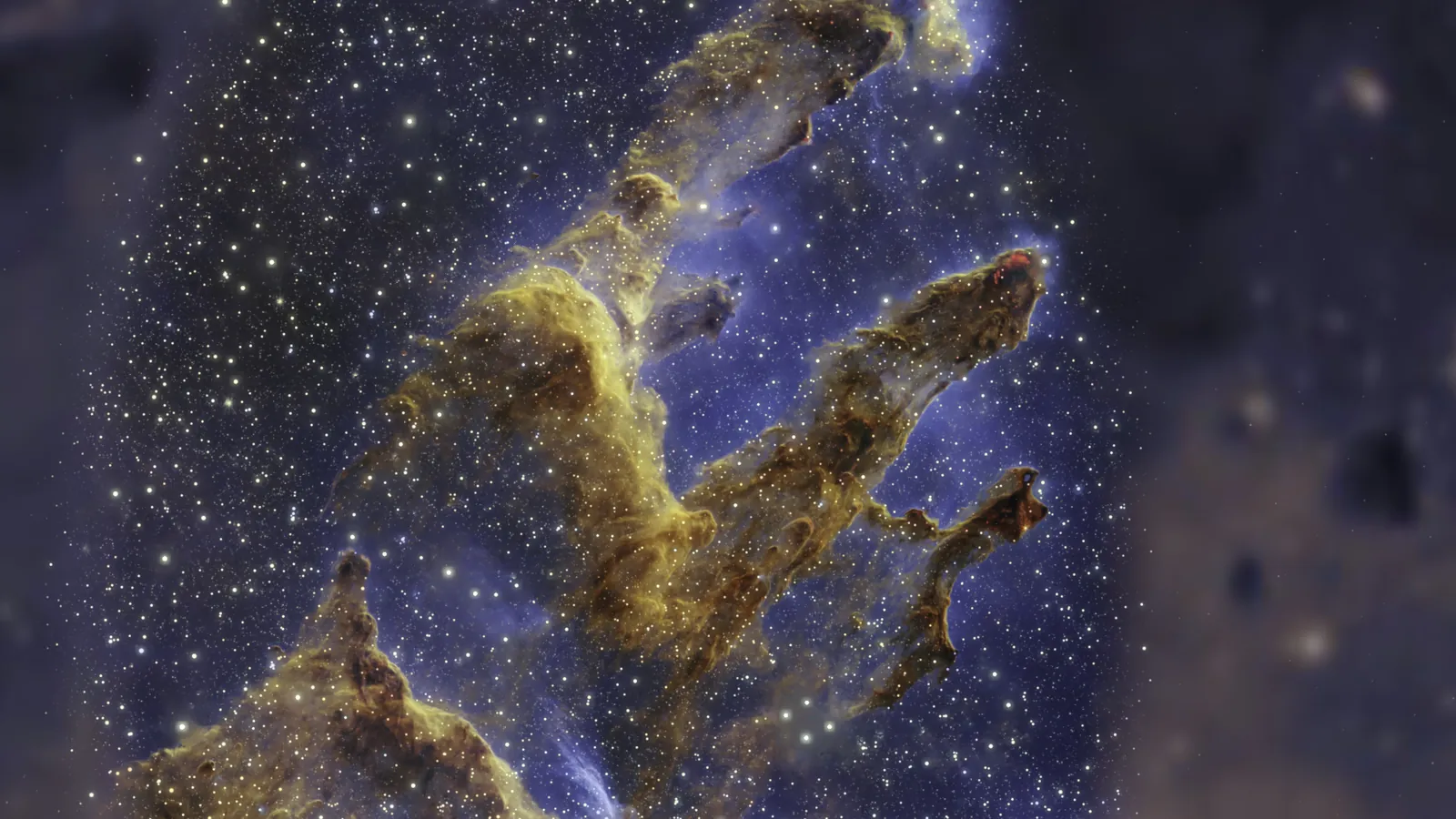
Everdust's Night Sky on Apple Vision Pro puts the real sky for your place and time around you: look at a planet and pinch to fly there, or at one of its 29 wonders, a nebula, a galaxy or a star cluster, and fly inside it. The Everdust Atlas has a page for each.
On iPhone, iPad and Android, Everdust has Tonight's Sky: the Moon, the planets, meteor showers, Space Station passes, the aurora forecast and the clouds, in plain words. Since November 2026 Night Sky is on iPhone, iPad and Android too: hold up the phone and tap a wonder to fly into it.
The free version covers every world and toy, The Story of Everything in full, and each game's first 3 levels or more and its daily level; Everdust Plus unlocks the rest.
Everdust is free on Apple Vision Pro, Apple TV, Android phones and tablets, iPhone, iPad and Meta Quest. On Mac, it’s a free download; the Mac App Store version is in review.
Everdust on the App Store for Apple Vision ProGet it on Google PlayEverdust on the App Store for iPhoneEverdust on the App Store for iPadEverdust on the App Store for Meta Quest
Questions people ask
What is the best night sky app for Apple Vision Pro? It depends on what you want. Night Sky by iCandi Apps has its own Vision Pro app, an immersive planetarium with Aura Sky Tours. Stellarium Mobile runs there as an iPad app, in a window. Everdust's Night Sky (free, made by me) puts the real sky for your place and time around you, and you pinch to fly to a planet or into a nebula. The Vision Pro astronomy apps page compares more.
Is Stellarium or Night Sky better? Stellarium gives you more for less: a deeper catalog, telescope control, a cheap upgrade you can buy once, a free desktop version, and Android. Night Sky is the more guided and polished one on Apple devices, with AR views and an AI astronomer on its Aura subscription, but it isn't on Android.
Is there a free night sky app with no subscription? Stellarium Mobile is free, and its Plus upgrade can be bought once rather than as a subscription; Stellarium's desktop version is free and open source. On Apple Vision Pro, Everdust's Night Sky is free, with no ads and no subscription needed.
Is the Night Sky app on Android? No. Night Sky by iCandi Apps is on iPhone, iPad, Mac, Apple Watch, Apple TV and Vision Pro only. On Android, Stellarium Mobile is the closest. Everdust's Night Sky is a different thing with the same name, and it is on Android.
Is there a night sky app for Meta Quest? Yes: Stellarium VR is on the Meta Horizon Store for $9.99, from the makers of Stellarium Mobile. Everdust is free on Meta Quest 3 and 3S, but its Night Sky isn't in the Quest version yet; it comes in a later update.
Sources
- Stellarium Mobile on the App Store
- Stellarium VR on the Meta Horizon Store
- Stellarium (stellarium.org)
- Night Sky on the App Store
- Everdust on the App Store
- Everdust on Google Play
- iCandi Apps (Night Sky's site)
- Everdust 1.1 for Apple Vision Pro: Night Sky (what's in it, and what's a model)
- Stellarium Mobile on Google Play
- Everdust on the Meta Horizon Store
- Everdust on Google Play: does it work offline?
Checked November 4, 2026. Prices and features change; the store listing is always the final word. I make Everdust, and I’ve tried to describe the other apps as fairly as their makers do. Everdust is also listed on AlternativeTo as an alternative to Stellarium.