The Sagittarius Star Cloud
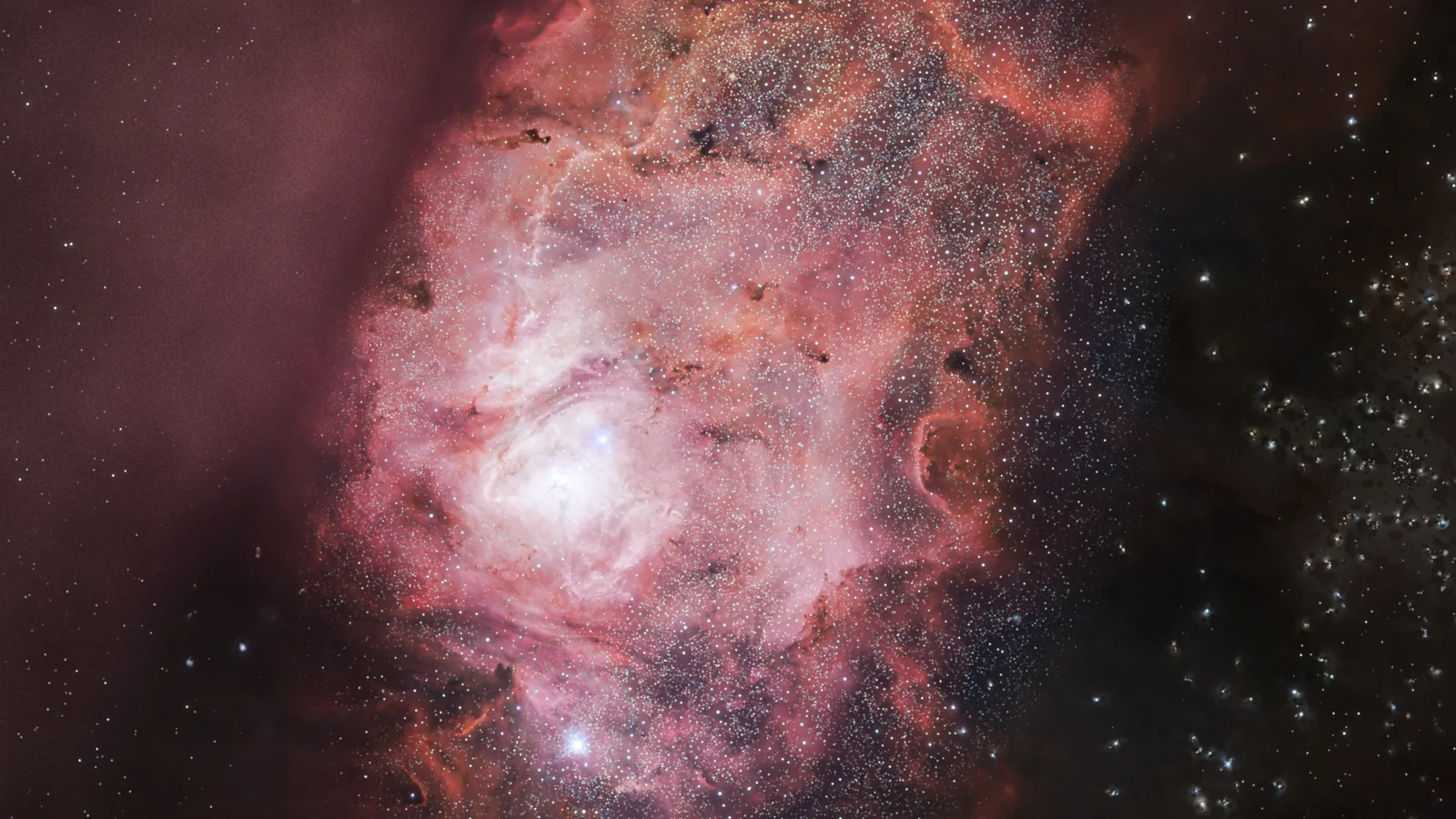
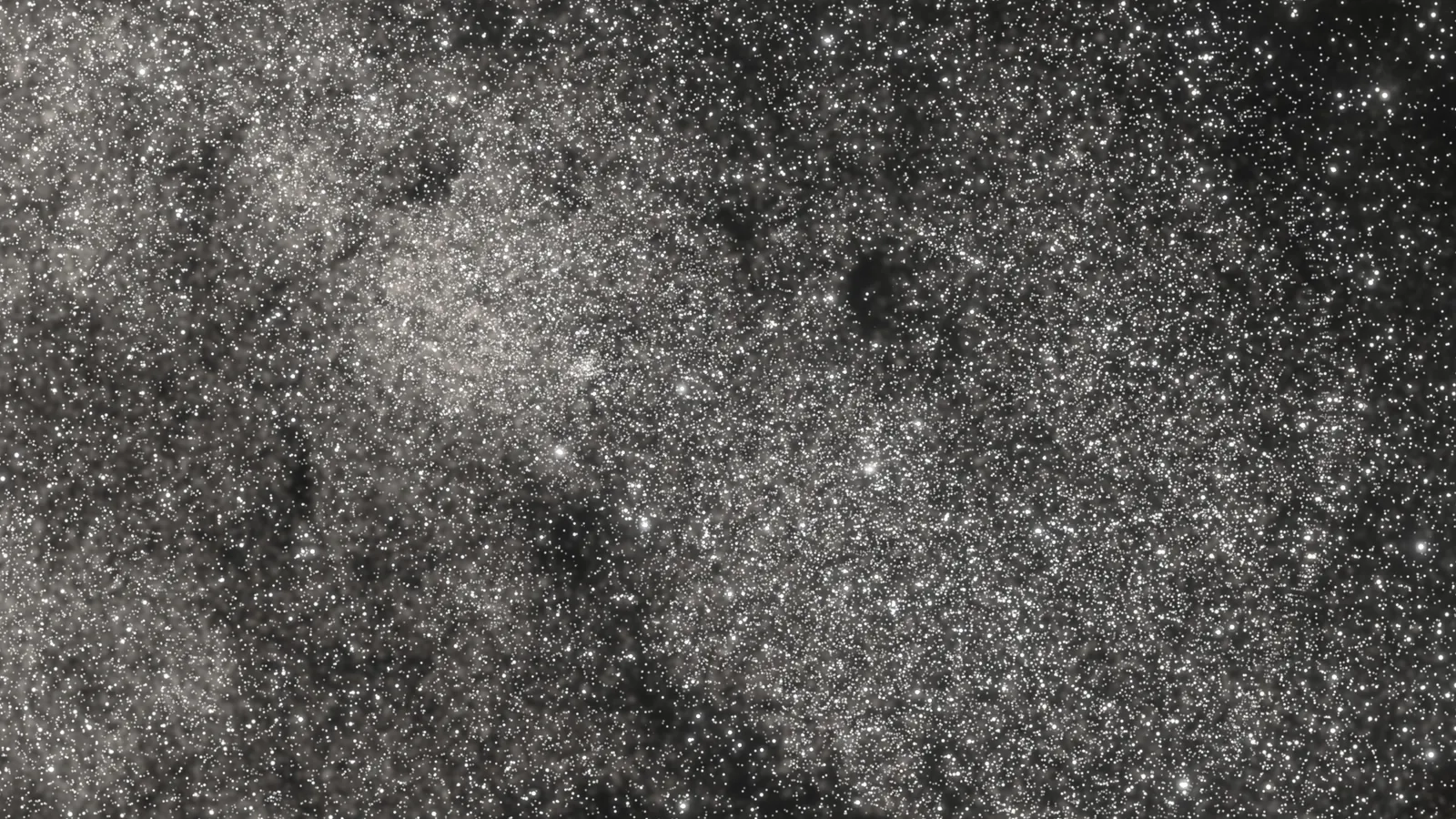
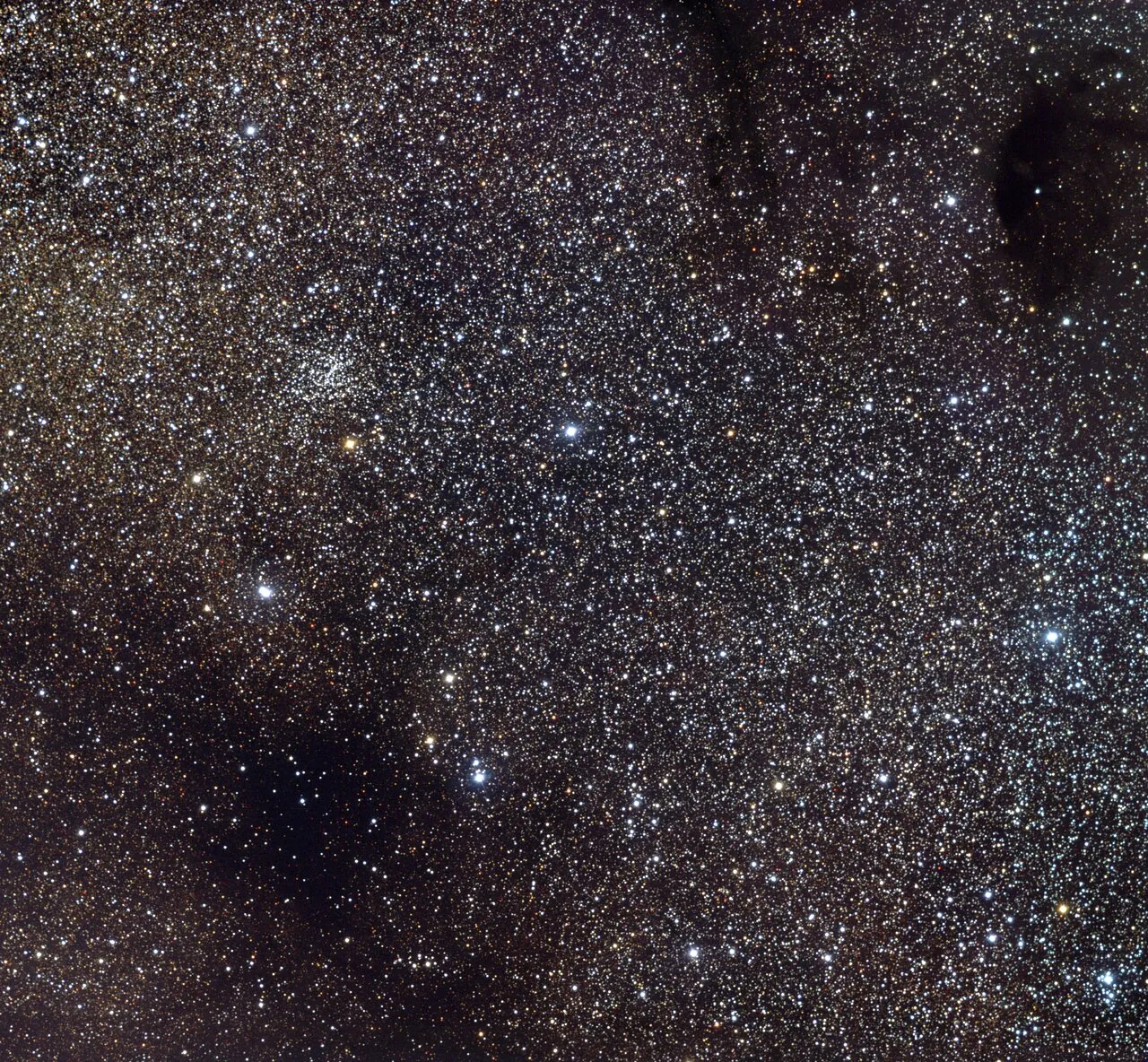
The Sagittarius Star Cloud, M24, isn't a single object: it's a clear gap between clouds of dust through which you see a dense crowd of stars 10,000 to 16,000 light-years away, in the Sagittarius spiral arm of our Galaxy. To the eye it's a bright hazy patch in the Milky Way above the Teapot of Sagittarius; binoculars turn it into a field of countless stars.
When to see it
Best evenings: June to October.
Seen from south of about 61° N. Choose your city for tonight’s times and where to look.
“Up” means at least 10° above the horizon while the Sun is at least 12° below it (dark enough for faint nebulae and galaxies). Your location, if you share it, stays on this device.
At a glance
- Distance
- 10,000 to 16,000 light-years [1]
- Constellation
- Sagittarius
- Position (J2000)
- RA 18h 16m 56s, Dec −18° 31′
- Visible from
- south of about 61° N (farther north it never climbs 10° above the horizon)
- High in the evening (9 pm)
- August from mid-northern latitudes; June to October from mid-southern latitudes
- How to see it
- With your eyes
The Sagittarius Star Cloud tonight from four cities
| City | Tonight |
|---|---|
| New York | Not visible from here tonight; best in June.not tonight; best in June |
| Los Angeles | Not visible from here tonight; best in June.not tonight; best in June |
| London | Not visible from here tonight; best in June.not tonight; best in June |
| Sydney | Up after dark until 10 pm, best around 8:30 pm, look west.best 8:30 pm, 29° up, west |
Tonight in each city’s local time, computed November 8, 2026 with Astronomy Engine (the page refreshes every hour). For your own city, choose it above.
The Sagittarius Star Cloud: the facts
| Also called | M24, the Small Sagittarius Star Cloud [1] |
|---|---|
| Brightness | magnitude 4.6 (visible to the eye from a dark site) [1] |
| The window | about 600 light-years wide [1] |
| Messier's description (1764) | "a large nebulosity in which there are many stars of different magnitudes" [1] |
What are you looking at in M24?
Most of the Milky Way's inner parts are hidden from us by dust between the stars. In M24 there's a hole in that dust, and you look down a tunnel into the starry depths of the Sagittarius arm. Every point is a star; the glow between them is the light of millions more too faint to see one by one. Charles Messier listed it in 1764, though it is a region of sky rather than a cluster.
Step inside the Sagittarius Star Cloud in Everdust
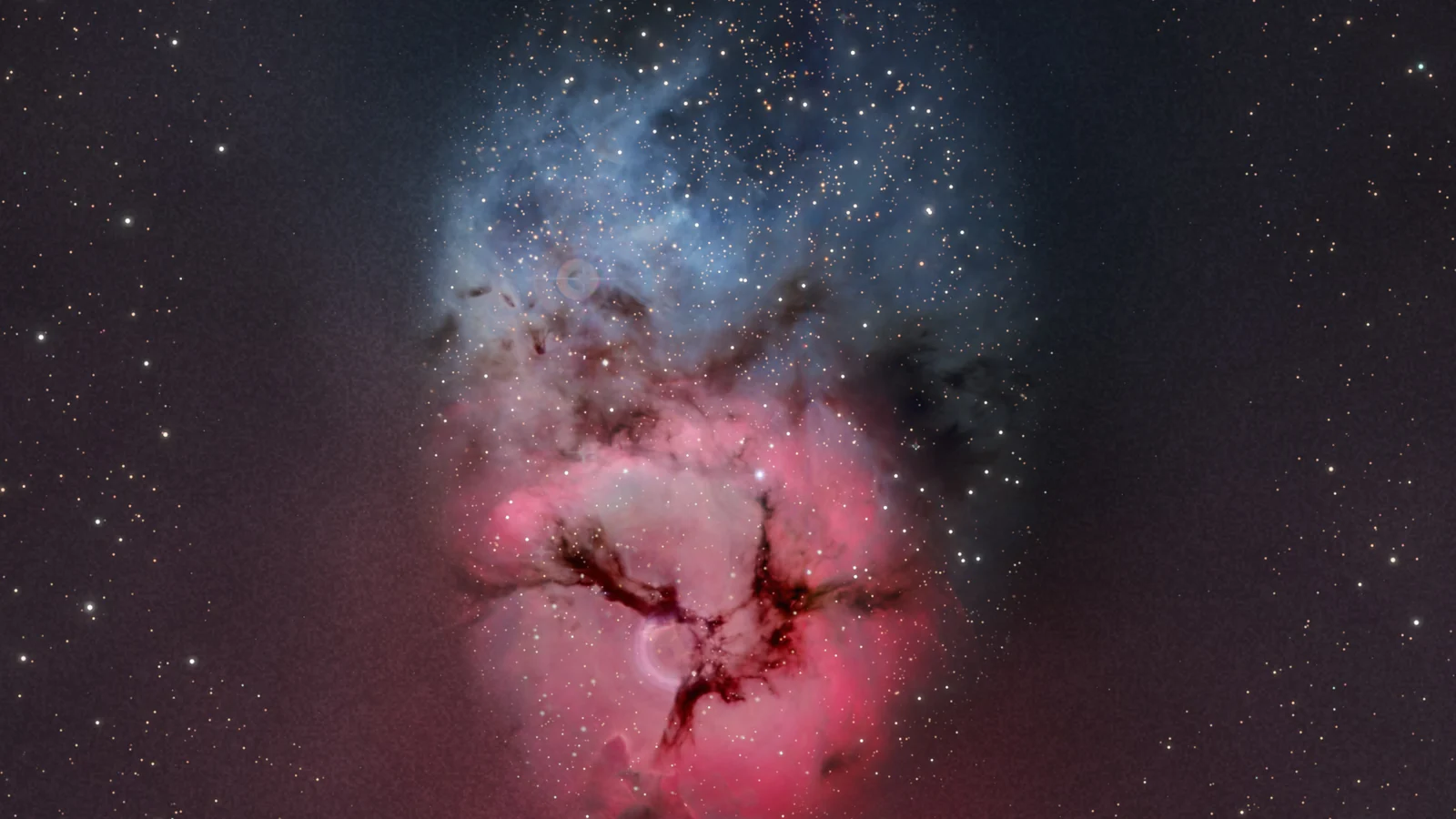
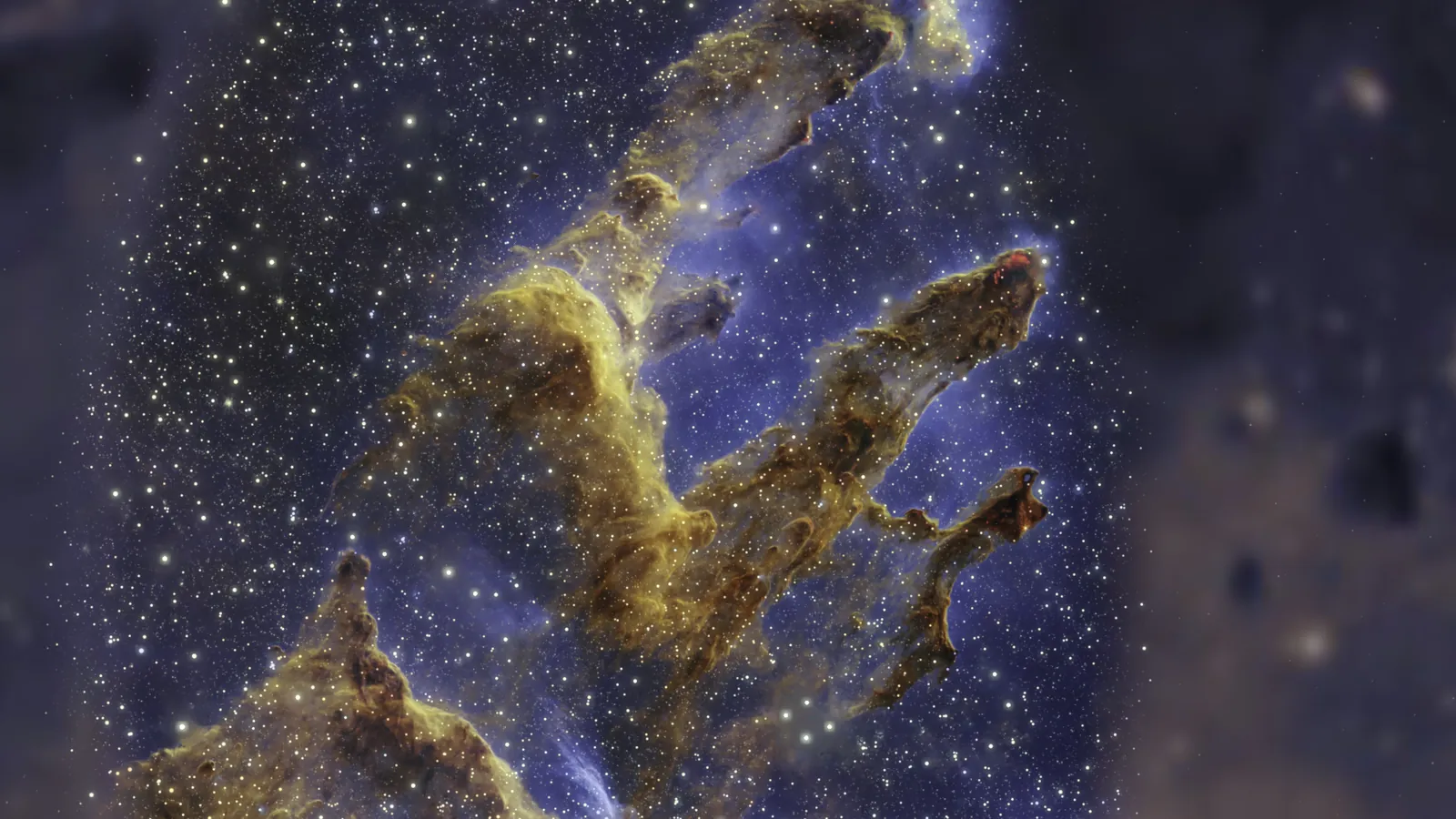
In Everdust’s Night Sky, look at the Sagittarius Star Cloud and pinch to fly there on Apple Vision Pro, or tap it on iPhone, iPad and Android. What you arrive in, in the app’s own words: “The Sagittarius Star Cloud as it is today: its real stars, from sky surveys, through a window in the Milky Way's dust; how far each is, is modelled.”
Everdust on the App Store for iPhone, iPad and Vision ProEverdust on Google Play for Android
Everdust is free on the App Store for Apple Vision Pro, iPhone and iPad, and on Google Play for Android; Night Sky flies to the Sagittarius Star Cloud on all of them. It is also free on Apple TV, with other worlds. I make Everdust, so weigh that; a star-map app such as Stellarium or SkySafari will find the Sagittarius Star Cloud just as well.
Questions people ask
Can I see the Sagittarius Star Cloud tonight? It depends on where you are. It can be seen from south of about 61° N, and it is best in the evening sky August from mid-northern latitudes and June to October from mid-southern latitudes. Choose your city on this page for tonight's times and where to look. With your eyes: Visible to the eye from a dark site as a bright patch in the Milky Way; binoculars are perfect for it.
Where is the Sagittarius Star Cloud in the sky? In the constellation Sagittarius, at right ascension 18h 16m 56s and declination −18° 31′ (J2000). It can be seen from south of about 61° N (farther north it never climbs 10° above the horizon).
How far away is the Sagittarius Star Cloud? Its stars are 10,000 to 16,000 light-years away (NASA), seen through a 600-light-year-wide window in the dust.
When is the best time to see M24? On summer evenings in the Northern Hemisphere and winter evenings in the Southern, when Sagittarius is up after dark; this page computes the best month for your city.
Sources
- Distance: “The 600-light-year-wide window opens onto stars some 10,000 to 16,000 light-years distant” (science.nasa.gov, the figure Everdust uses)
- NOIRLab noao-m24: Sagittarius Star Cloud
Distance and position: the deep-sky catalog in Everdust’s Night Sky (read November 1, 2026), each figure quoted from the source above. Constellation, seasons and tonight are computed with Astronomy Engine (Don Cross, MIT license). More: Wikipedia.