The Large Magellanic Cloud
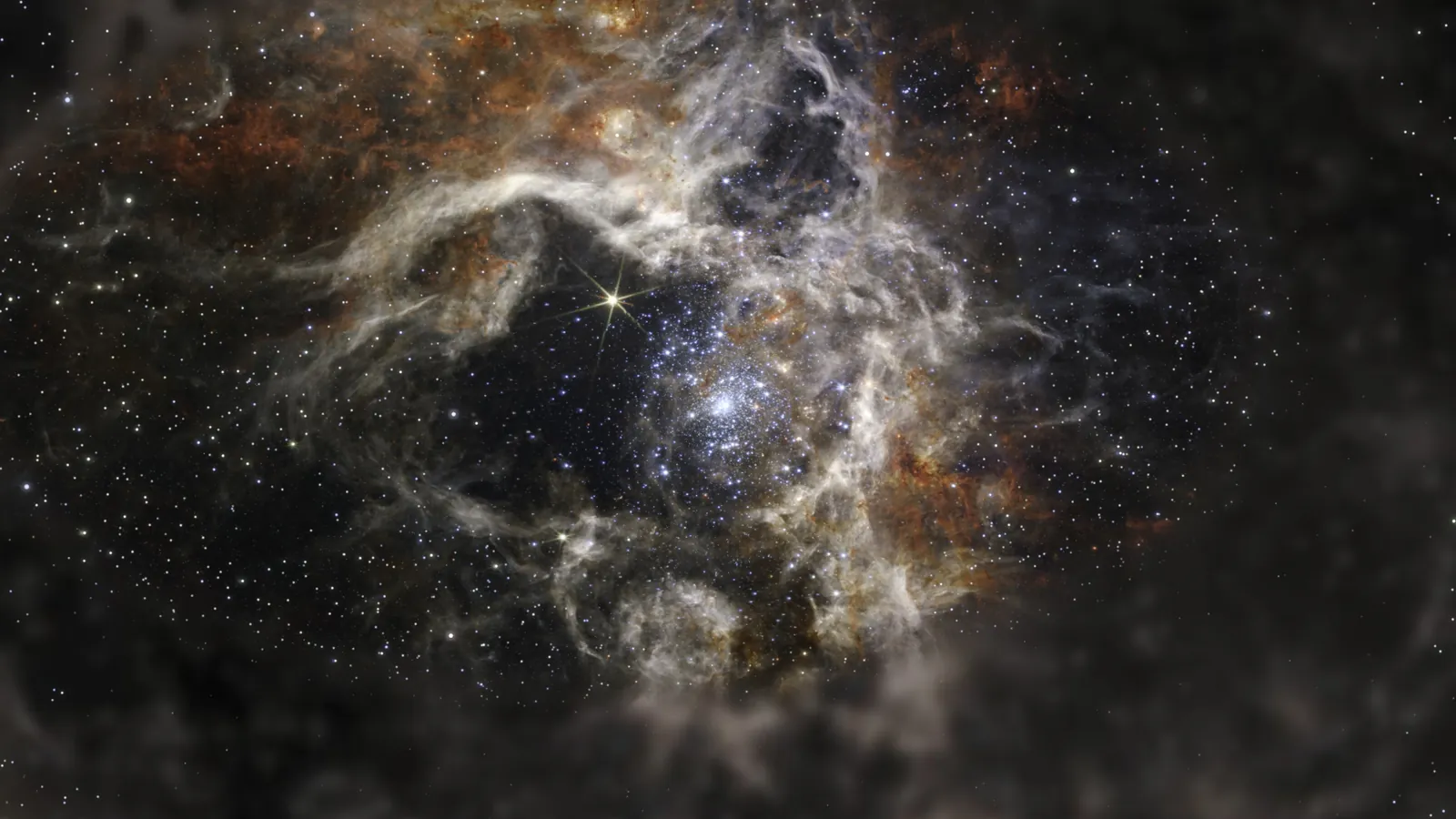
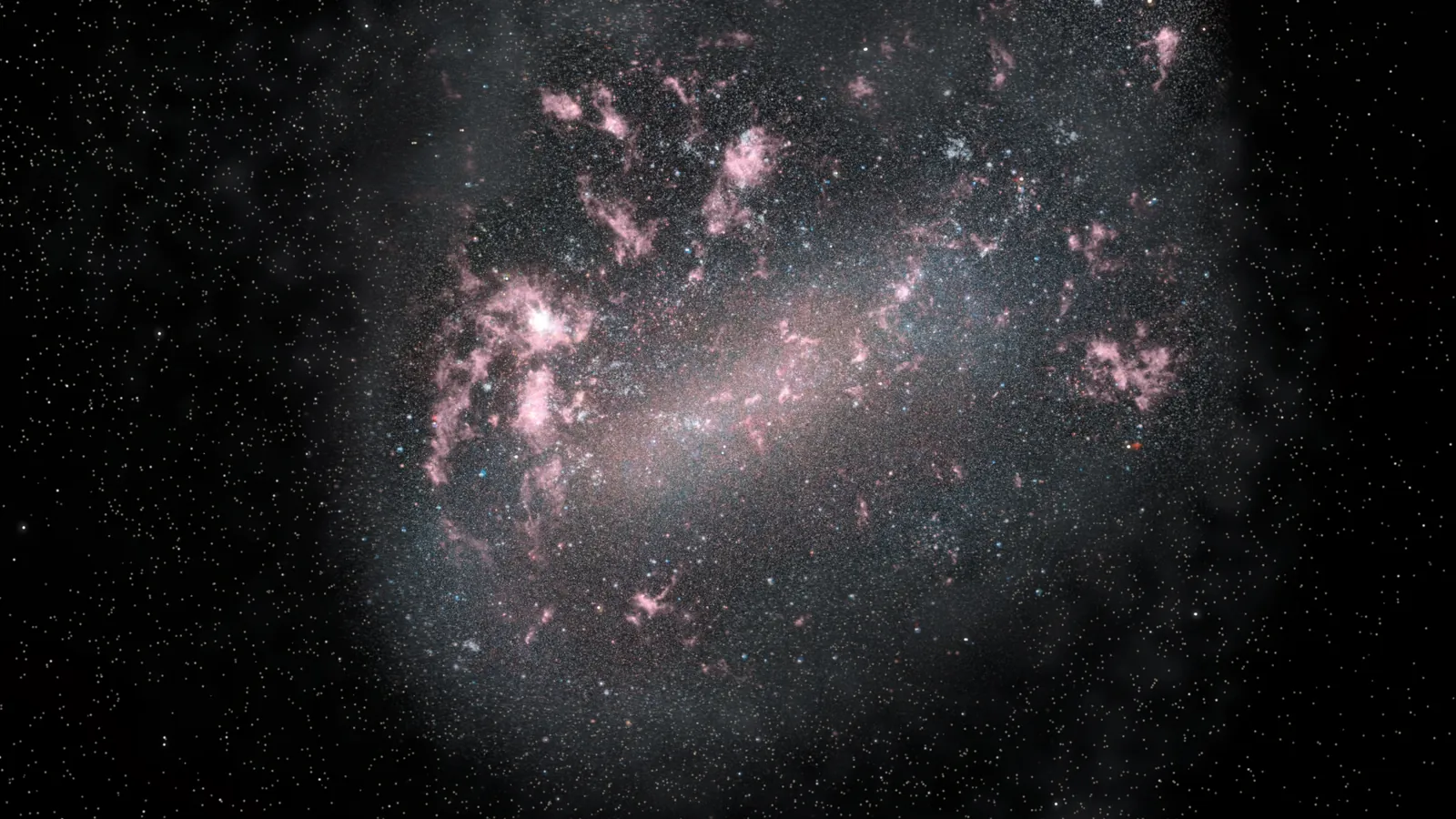
The Large Magellanic Cloud is a small galaxy orbiting the Milky Way, about 163,000 light-years away, one of our nearest galactic neighbors. From the Southern Hemisphere it is easy to see with your eyes: a large, pale glow like a torn-off piece of the Milky Way, in the constellations Dorado and Mensa. It holds the Tarantula Nebula, the brightest star-forming region near us.
When to see it
Best evenings: November to April (southern hemisphere).
Seen from south of about 10° N. Choose your city for tonight’s times and where to look.
“Up” means at least 10° above the horizon while the Sun is at least 12° below it (dark enough for faint nebulae and galaxies). Your location, if you share it, stays on this device.
At a glance
- Distance
- 163,000 light-years [1]
- The light you see left it
- about 163,000 years ago
- Size across
- about 30,720 by 26,134 light-years (its glow in Night Sky's wonders catalogue: 646′ × 550′)
- Constellation
- Dorado
- Position (J2000)
- RA 5h 23m 34s, Dec −69° 45′
- Visible from
- south of about 10° N (farther north it never climbs 10° above the horizon)
- High in the evening (9 pm)
- November to April from mid-southern latitudes
- How to see it
- With your eyes
The Large Magellanic Cloud tonight from four cities
| City | Tonight |
|---|---|
| New York | Always below your horizon here.never rises here |
| Los Angeles | Always below your horizon here.never rises here |
| London | Always below your horizon here.never rises here |
| Sydney | Up all night, best around 3 am, look south.best 3 am, 54° up, south |
Tonight in each city’s local time, computed November 8, 2026 with Astronomy Engine (the page refreshes every hour). For your own city, choose it above.
The Large Magellanic Cloud: the facts
| Kind | a dwarf satellite galaxy of the Milky Way [1] |
|---|---|
| Its sibling | the Small Magellanic Cloud [1] |
| Contains | the Tarantula Nebula and many star clusters [3] |
| Supernova | SN 1987A, the nearest supernova seen since the telescope was invented, went off in it in 1987 [4] |
How do you find the Large Magellanic Cloud?
From the Southern Hemisphere, on a moonless night away from city lights, look roughly south for a pale cloud about the size of your fist at arm's length. It doesn't move like a cloud and it doesn't fade when the weather clears: it's a galaxy. The Small Magellanic Cloud is a smaller, fainter patch about 20° away.
From most of the Northern Hemisphere it never rises; the table on this page shows when it's up from where you are.
What is the Large Magellanic Cloud made of?
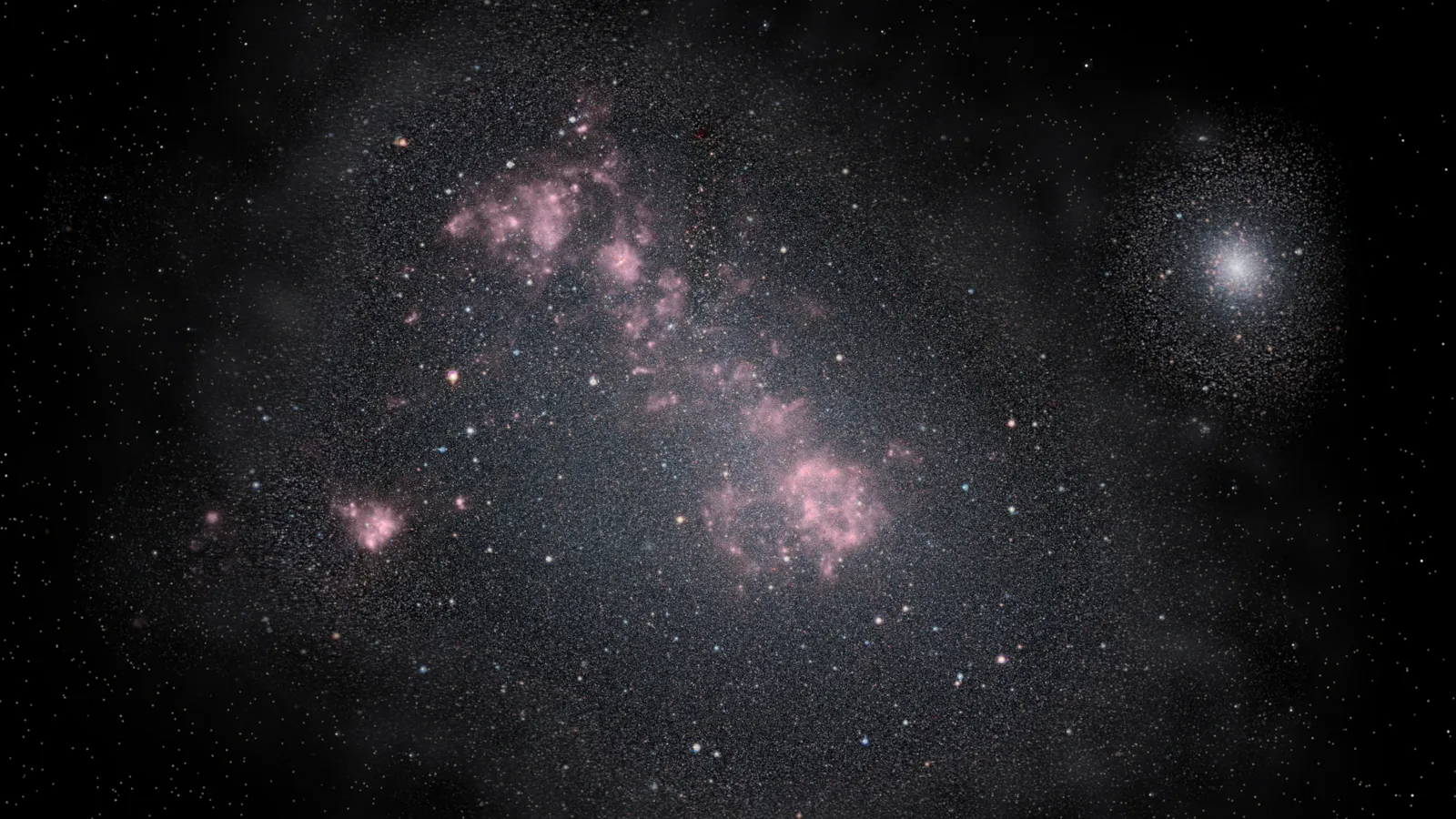
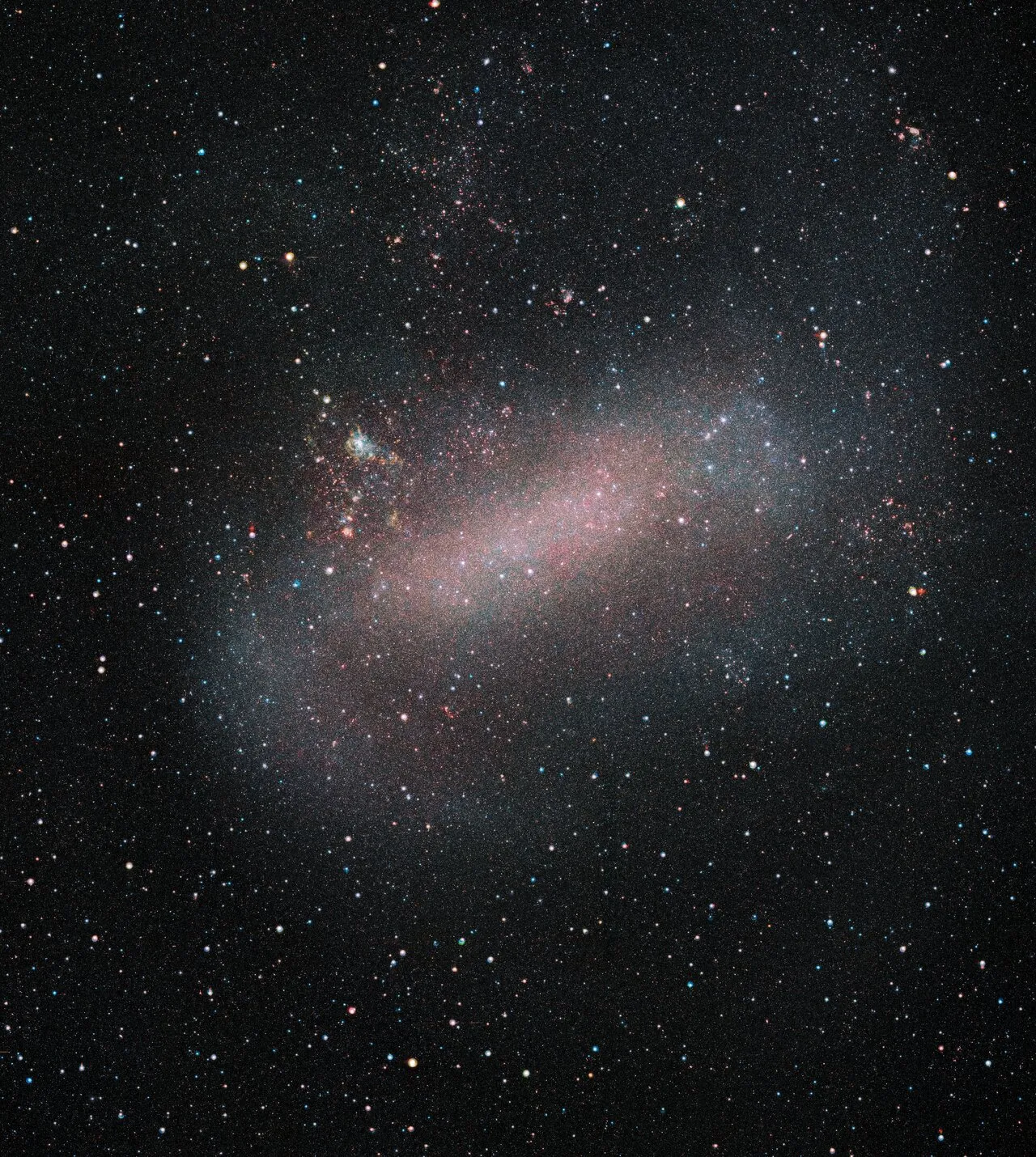
Billions of stars, gas and dust in a disc with a long bar of old stars across its middle. ESO's VISTA survey telescope maps it in infrared light, which sees through its dust, to work out how and when its stars formed and its three-dimensional shape. It is tilted to our line of sight, its north-east side nearer to us.
Step inside the Large Magellanic Cloud in Everdust
In Everdust’s Night Sky, look at the Large Magellanic Cloud and pinch to fly there on Apple Vision Pro, or tap it on iPhone, iPad and Android. What you arrive in, in the app’s own words: “The Large Magellanic Cloud as it is today: ESO's infrared photograph of it, on its measured tilted disc, with the Tarantula Nebula to the north-east of its bar.”
Everdust on the App Store for iPhone, iPad and Vision ProEverdust on Google Play for Android
Everdust is free on the App Store for Apple Vision Pro, iPhone and iPad, and on Google Play for Android; Night Sky flies to the Large Magellanic Cloud on all of them. It is also free on Apple TV, with other worlds. I make Everdust, so weigh that; a star-map app such as Stellarium or SkySafari will find the Large Magellanic Cloud just as well.
Questions people ask
Can I see the Large Magellanic Cloud tonight? It depends on where you are. It can be seen from south of about 10° N, and it is best in the evening sky November to April from mid-southern latitudes. Choose your city on this page for tonight's times and where to look. With your eyes: Plain to the eye from a dark southern site, as a soft glow several Moon-widths across; binoculars show star clusters and nebulae in it.
Where is the Large Magellanic Cloud in the sky? In the constellation Dorado, at right ascension 5h 23m 34s and declination −69° 45′ (J2000). It can be seen from south of about 10° N (farther north it never climbs 10° above the horizon).
How far away is the Large Magellanic Cloud? About 163,000 light-years (ESO). Only a few small, faint dwarf galaxies are nearer.
Can you see the Large Magellanic Cloud from the United States or Europe? Not from the mainland US, Canada or Europe: it's too far south in the sky. From Hawaii it scrapes the southern horizon at best. It's high in the sky from Australia, New Zealand, southern Africa and South America.
Sources
- Distance: “The Large Magellanic Cloud, or LMC, is one of our nearest galactic neighbors, at only 163 000 light years from Earth” (eso.org, the figure Everdust uses)
- ESO eso1914a: The Large Magellanic Cloud revealed by VISTA
- ESA/Webb weic2212: Webb captures a cosmic Tarantula
- Wikipedia: SN 1987A
Distance and position: the deep-sky catalog in Everdust’s Night Sky (read November 1, 2026), each figure quoted from the source above. Constellation, seasons and tonight are computed with Astronomy Engine (Don Cross, MIT license). More: Wikipedia.