The Small Magellanic Cloud
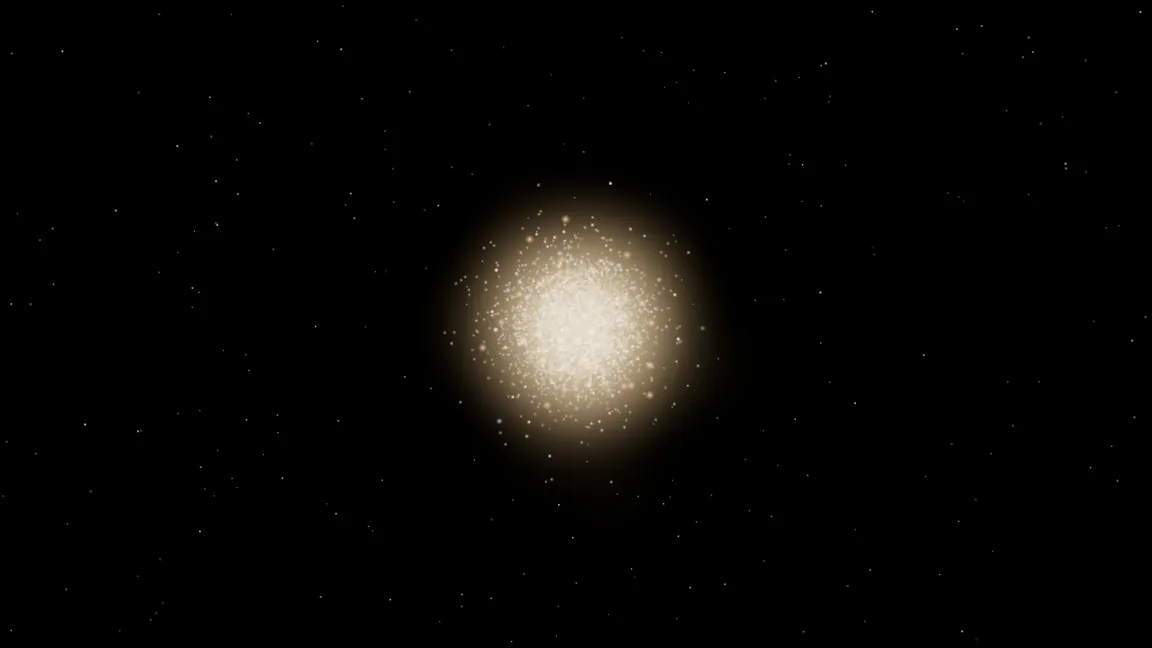
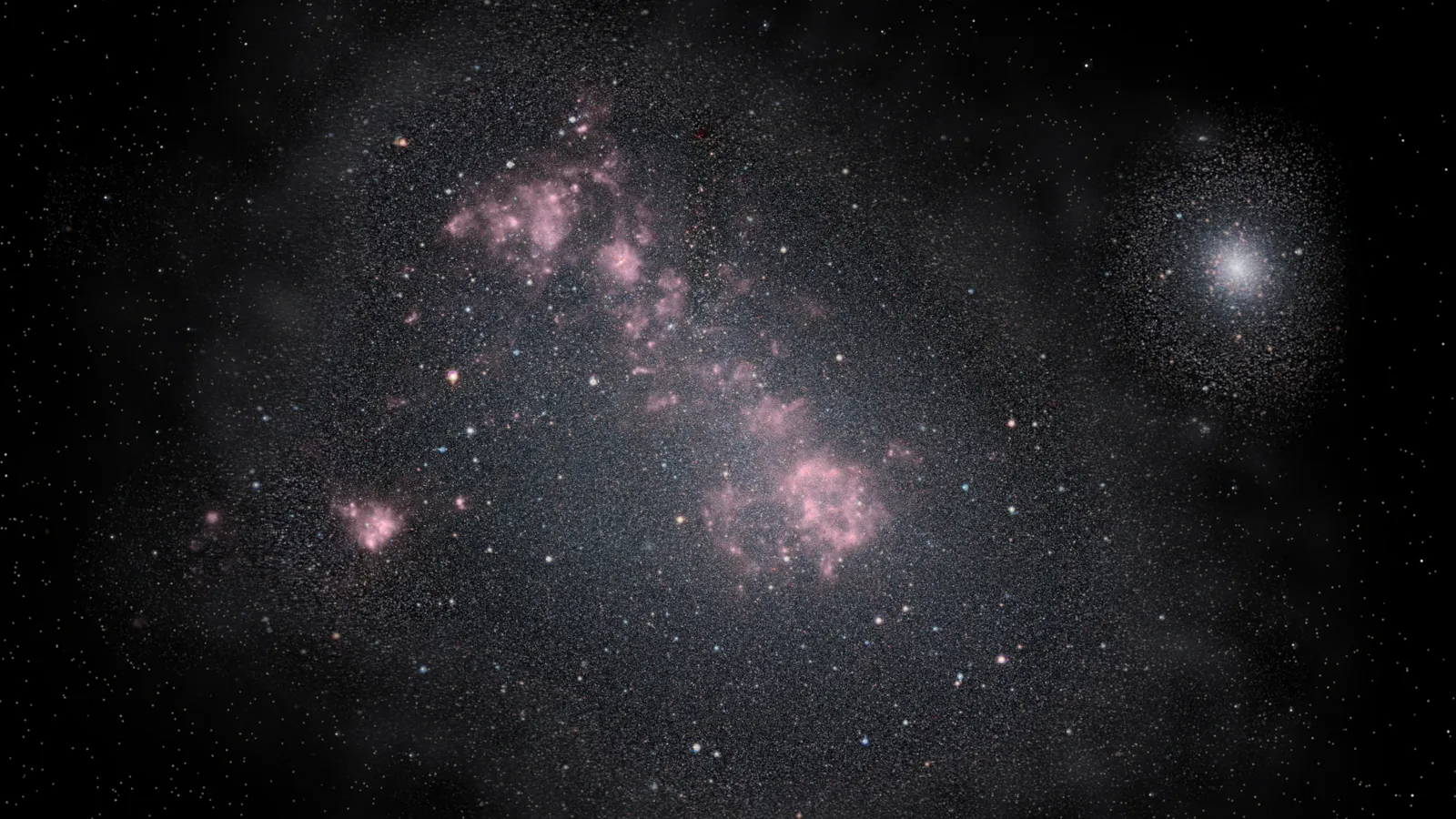
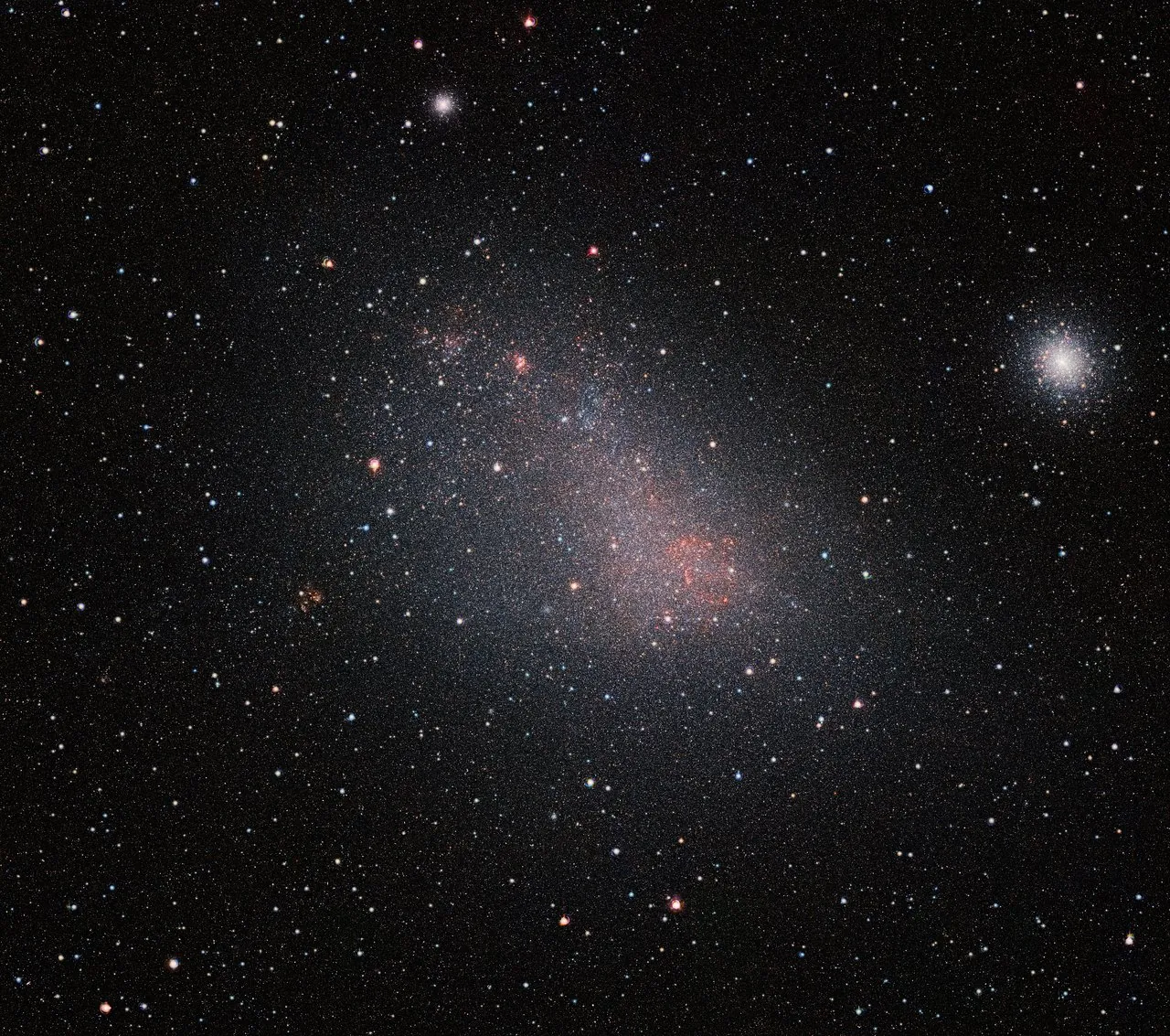
The Small Magellanic Cloud is a dwarf galaxy about 200,000 light-years away, the smaller twin of the Large Magellanic Cloud. From the Southern Hemisphere it's a striking pale patch to the unaided eye, in the constellation Tucana, with the bright globular cluster 47 Tucanae beside it (a part of our own Milky Way, far in front).
When to see it
Best evenings: August to February (southern hemisphere).
Seen from south of about 7° N. Choose your city for tonight’s times and where to look.
“Up” means at least 10° above the horizon while the Sun is at least 12° below it (dark enough for faint nebulae and galaxies). Your location, if you share it, stays on this device.
At a glance
- Distance
- 200,000 light-years [1]
- The light you see left it
- about 200,000 years ago
- Size across
- about 17,464 by 10,474 light-years (its glow in Night Sky's wonders catalogue: 300′ × 180′)
- Constellation
- Tucana
- Position (J2000)
- RA 0h 52m 45s, Dec −72° 50′
- Visible from
- south of about 7° N (farther north it never climbs 10° above the horizon)
- High in the evening (9 pm)
- August to February from mid-southern latitudes
- How to see it
- With your eyes
The Small Magellanic Cloud tonight from four cities
| City | Tonight |
|---|---|
| New York | Always below your horizon here.never rises here |
| Los Angeles | Always below your horizon here.never rises here |
| London | Always below your horizon here.never rises here |
| Sydney | Up all night, best around 10:45 pm, look south.best 10:45 pm, 51° up, south |
Tonight in each city’s local time, computed November 8, 2026 with Astronomy Engine (the page refreshes every hour). For your own city, choose it above.
The Small Magellanic Cloud: the facts
| Kind | a dwarf galaxy, the smaller twin of the Large Magellanic Cloud [1] |
|---|---|
| Distance in context | a twelfth of the way to the Andromeda Galaxy [1] |
| Shape | irregular, from its pulls with the Large Magellanic Cloud and the Milky Way [1] |
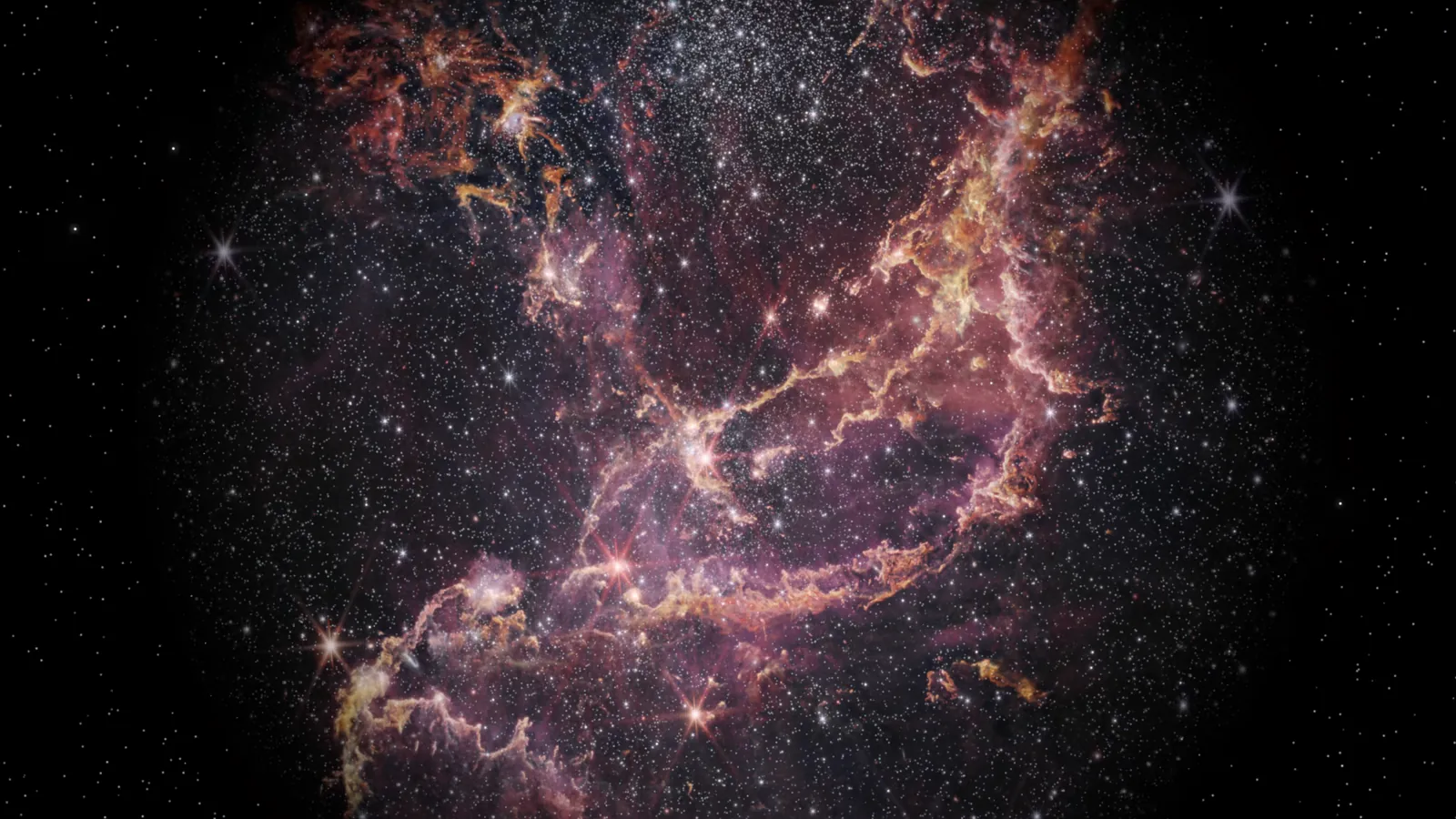
| Brightest star-forming region | NGC 346 [3] |
What does the Small Magellanic Cloud look like?
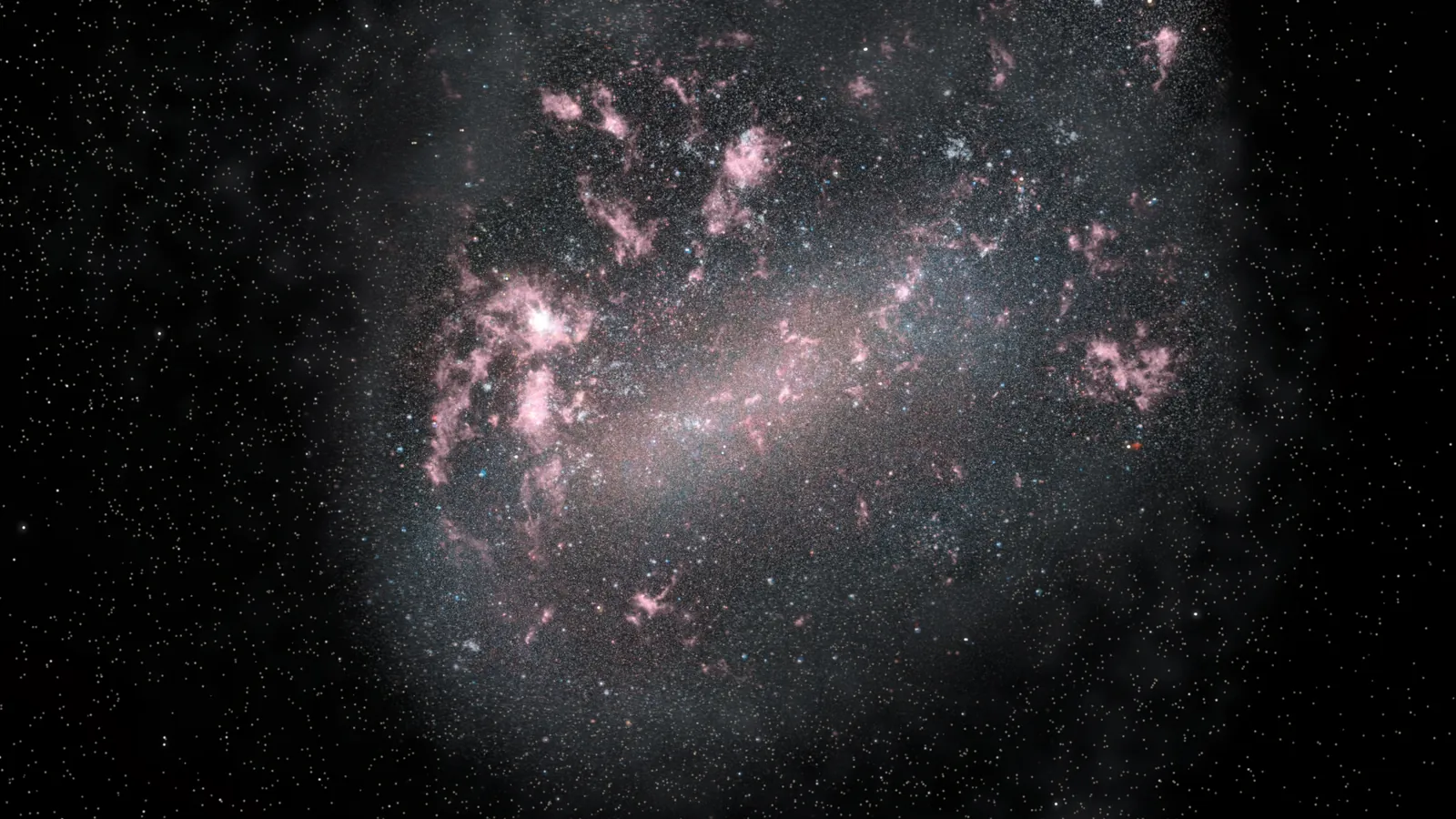
To the eye it's a soft, elongated glow, like a small detached cloud of the Milky Way. Dust hides much of it from visible-light telescopes, so ESO's VISTA survey telescope photographed it in infrared, which sees the myriad of its stars clearly: the result was the biggest infrared image of it ever made.
It isn't a flat disc. Measurements of its variable stars show it stretched out along our line of sight, its eastern side tens of thousands of light-years nearer than its western.
Step inside the Small Magellanic Cloud in Everdust
In Everdust’s Night Sky, look at the Small Magellanic Cloud and pinch to fly there on Apple Vision Pro, or tap it on iPhone, iPad and Android. What you arrive in, in the app’s own words: “The Small Magellanic Cloud as it is today: ESO's infrared photograph of it, stretched deep along your line of sight as measured.”
Everdust on the App Store for iPhone, iPad and Vision ProEverdust on Google Play for Android
Everdust is free on the App Store for Apple Vision Pro, iPhone and iPad, and on Google Play for Android; Night Sky flies to the Small Magellanic Cloud on all of them. It is also free on Apple TV, with other worlds. I make Everdust, so weigh that; a star-map app such as Stellarium or SkySafari will find the Small Magellanic Cloud just as well.
Questions people ask
Can I see the Small Magellanic Cloud tonight? It depends on where you are. It can be seen from south of about 7° N, and it is best in the evening sky August to February from mid-southern latitudes. Choose your city on this page for tonight's times and where to look. With your eyes: Visible to the eye from a dark southern site as a pale patch; binoculars show 47 Tucanae and NGC 362 beside it.
Where is the Small Magellanic Cloud in the sky? In the constellation Tucana, at right ascension 0h 52m 45s and declination −72° 50′ (J2000). It can be seen from south of about 7° N (farther north it never climbs 10° above the horizon).
How far away is the Small Magellanic Cloud? About 200,000 light-years (ESO), a little farther than the Large Magellanic Cloud.
Is 47 Tucanae part of the Small Magellanic Cloud? No. 47 Tucanae sits beside it on the sky but is a globular cluster of our own Milky Way, about 16,700 light-years away, more than ten times nearer.
Sources
- Distance: “the SMC lies about 200 000 light-years away, just a twelfth of the distance to the more famous Andromeda Galaxy” (eso.org, the figure Everdust uses)
- ESO eso1714a: VISTA’s view of the Small Magellanic Cloud
- ESA/Webb weic2301: Webb uncovers star formation in cluster's dusty ribbons (NGC 346, 11 January 2023)
Distance and position: the deep-sky catalog in Everdust’s Night Sky (read November 1, 2026), each figure quoted from the source above. Constellation, seasons and tonight are computed with Astronomy Engine (Don Cross, MIT license). More: Wikipedia.