The Helix Nebula
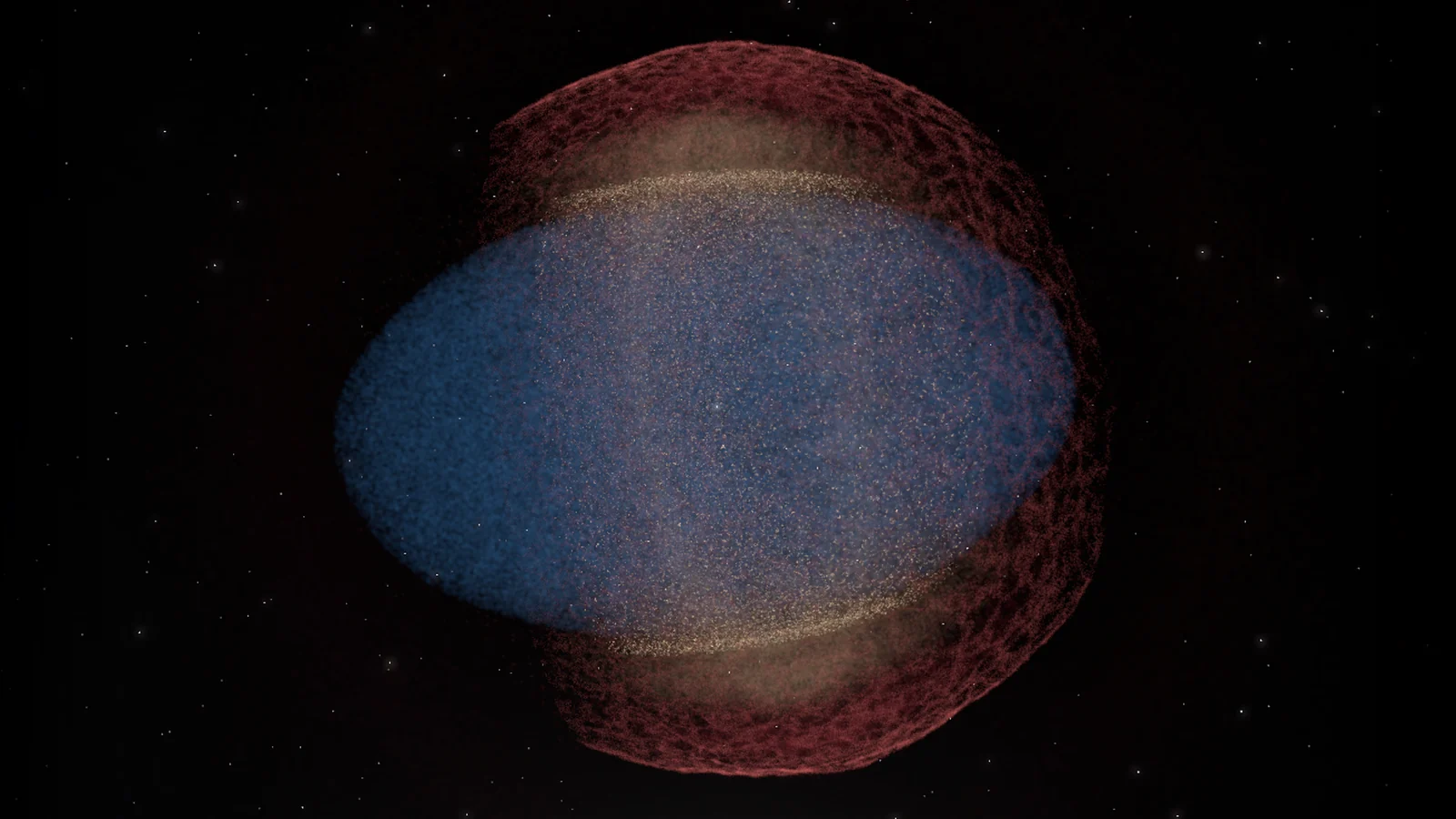
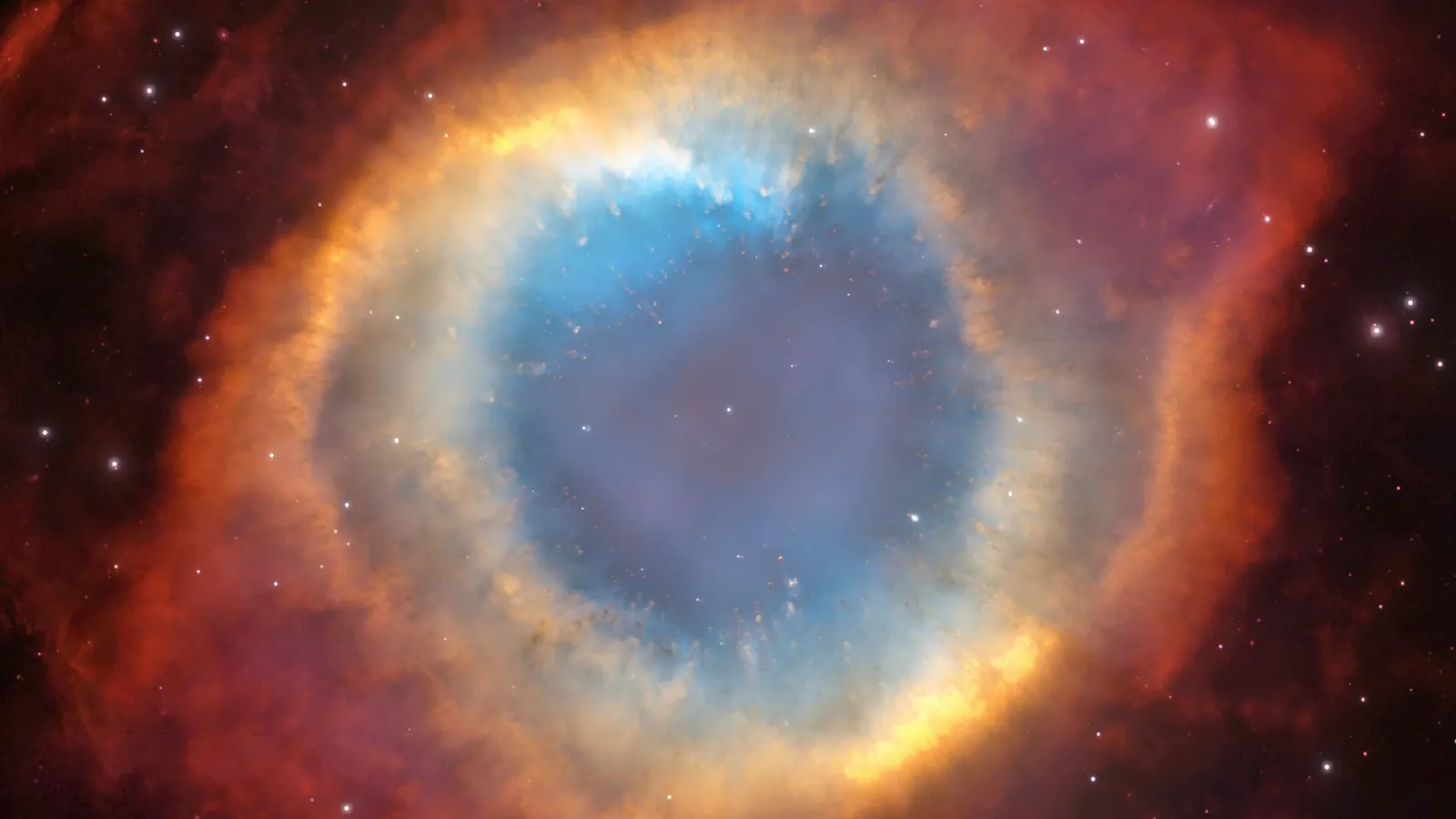
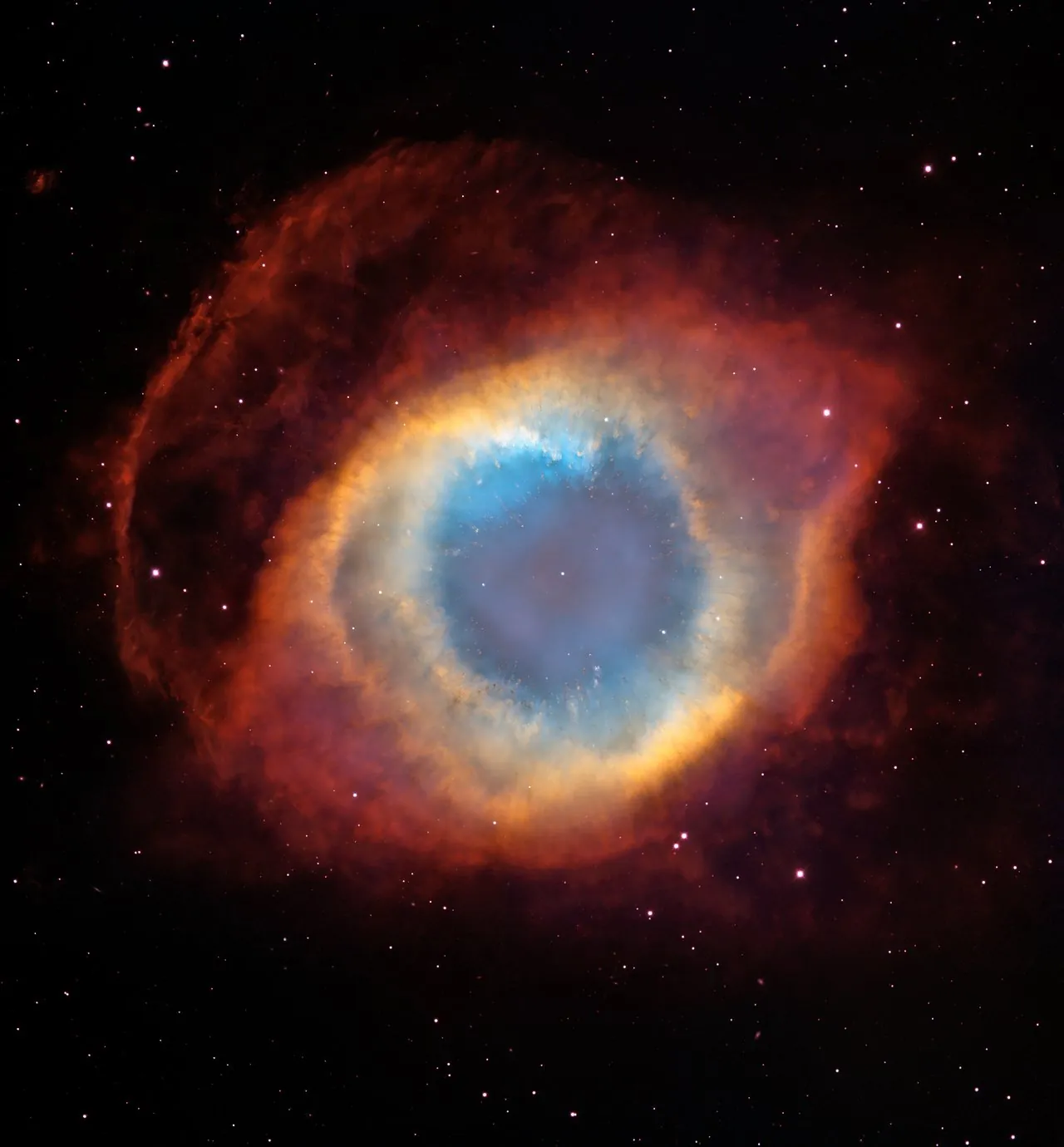
The Helix Nebula is the glowing envelope of gas thrown off by a dying star like the Sun, about 655 light-years away in Aquarius, one of the nearest planetary nebulae to Earth. It looks like a ring or an eye, but it is really two discs of gas nearly at right angles to each other. It's large on the sky but faint, so it needs a dark sky.
When to see it
Best evenings: August to December (southern hemisphere).
Seen from south of about 59° N. Choose your city for tonight’s times and where to look.
“Up” means at least 10° above the horizon while the Sun is at least 12° below it (dark enough for faint nebulae and galaxies). Your location, if you share it, stays on this device.
At a glance
- Distance
- 655 light-years [1]
- The light you see left it
- around the year 1370
- Constellation
- Aquarius
- Position (J2000)
- RA 22h 29m 39s, Dec −20° 50′
- Visible from
- south of about 59° N (farther north it never climbs 10° above the horizon)
- High in the evening (9 pm)
- August to December from mid-southern latitudes
- How to see it
- With binoculars
The Helix Nebula tonight from four cities
| City | Tonight |
|---|---|
| New York | Not visible from here tonight; best in September.not tonight; best in September |
| Los Angeles | Up now until 11:10 pm, best around 8:30 pm, look south.best 8:30 pm, 32° up, south |
| London | Not visible from here tonight; best in September.not tonight; best in September |
| Sydney | Up after dark until 2:20 am, best around 8:30 pm, look almost straight up.best 8:30 pm, 77° up, overhead |
Tonight in each city’s local time, computed November 8, 2026 with Astronomy Engine (the page refreshes every hour). For your own city, choose it above.
The Helix Nebula: the facts
| Also called | NGC 7293 [2] |
|---|---|
| What it is | the gas shed by a dying Sun-like star, lit by the white dwarf left at its center [2] |
| Its shape | two gaseous discs nearly perpendicular to each other [2] |
| Webb's 2026 close-up | thousands of comet-like knots streaming away from the central star [1] |
What is the Helix Nebula made of?
It's what's left of a star much like the Sun. As such a star runs out of fuel it swells into a red giant and puffs off its outer layers; the hot core left behind, a white dwarf, floods those layers with ultraviolet light and makes them glow. The Helix is near enough that both Hubble and a 4-meter ground telescope were needed to capture all of it.
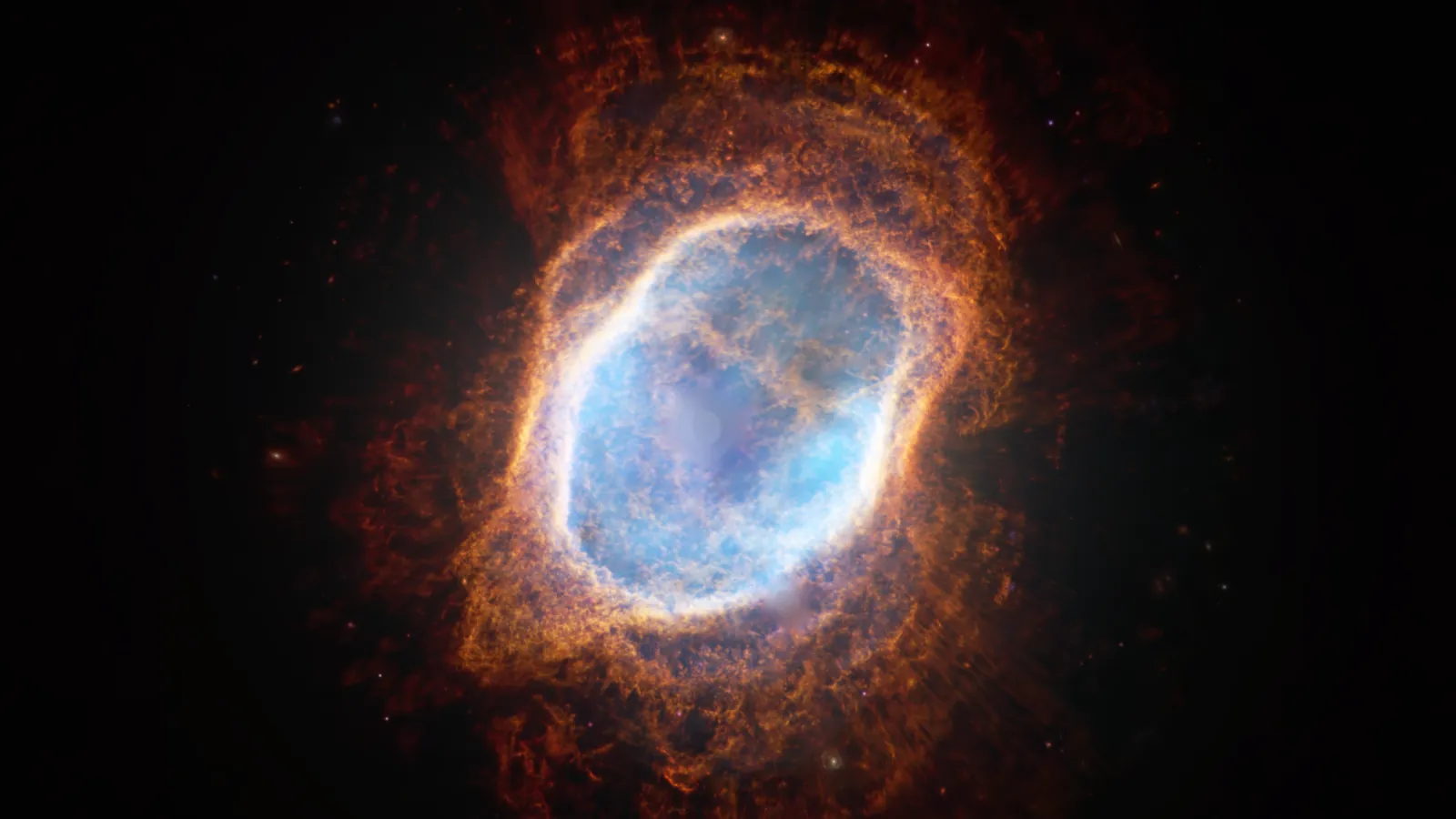
Webb's infrared close-up of its inner edge shows thousands of comet-like knots, dense clumps of gas whose tails stream away from the star, and the stark change from the hottest gas near the star to the coolest gas farther out.
Step inside the Helix Nebula in Everdust
In Everdust’s Night Sky, look at the Helix Nebula and pinch to fly there on Apple Vision Pro, or tap it on iPhone, iPad and Android. What you arrive in, in the app’s own words: “The Helix Nebula as it is today: the Hubble and Cerro Tololo mosaic in its measured depth, a disc and a ring nearly at right angles, with Webb's comet-like knots.”
Everdust on the App Store for iPhone, iPad and Vision ProEverdust on Google Play for Android
Everdust is free on the App Store for Apple Vision Pro, iPhone and iPad, and on Google Play for Android; Night Sky flies to the Helix Nebula on all of them. It is also free on Apple TV, with other worlds. I make Everdust, so weigh that; a star-map app such as Stellarium or SkySafari will find the Helix Nebula just as well.
Questions people ask
Can I see the Helix Nebula tonight? It depends on where you are. It can be seen from south of about 59° N, and it is best in the evening sky August to December from mid-southern latitudes. Choose your city on this page for tonight's times and where to look. With binoculars: Large but faint: binoculars or a small telescope at low power from a dark site show a round, ghostly glow.
Where is the Helix Nebula in the sky? In the constellation Aquarius, at right ascension 22h 29m 39s and declination −20° 50′ (J2000). It can be seen from south of about 59° N (farther north it never climbs 10° above the horizon).
Why is the Helix Nebula called the Eye of God? It's a popular nickname: in photographs its blue center and red-orange rim look like a giant eye. Astronomers call it a planetary nebula, NGC 7293.
Will the Sun make a nebula like the Helix? Probably something similar, billions of years from now: stars of about the Sun's mass end by shedding their outer layers round a white dwarf, which lights them for a few tens of thousands of years.
Sources
- Distance: “The Helix Nebula is a planetary nebula located approximately 655 light-years away” (esawebb.org, the figure Everdust uses)
- ESA/Hubble opo0432d: A new view of the Helix Nebula
Distance and position: the deep-sky catalog in Everdust’s Night Sky (read November 1, 2026), each figure quoted from the source above. Constellation, seasons and tonight are computed with Astronomy Engine (Don Cross, MIT license). More: Wikipedia.